

AeroPress vs Espresso Machine: Which One Is Right for You?
The AeroPress costs $40. An espresso machine costs $200 to $2,000. Here is what you get for the difference, and which one makes sense for your kitchen.

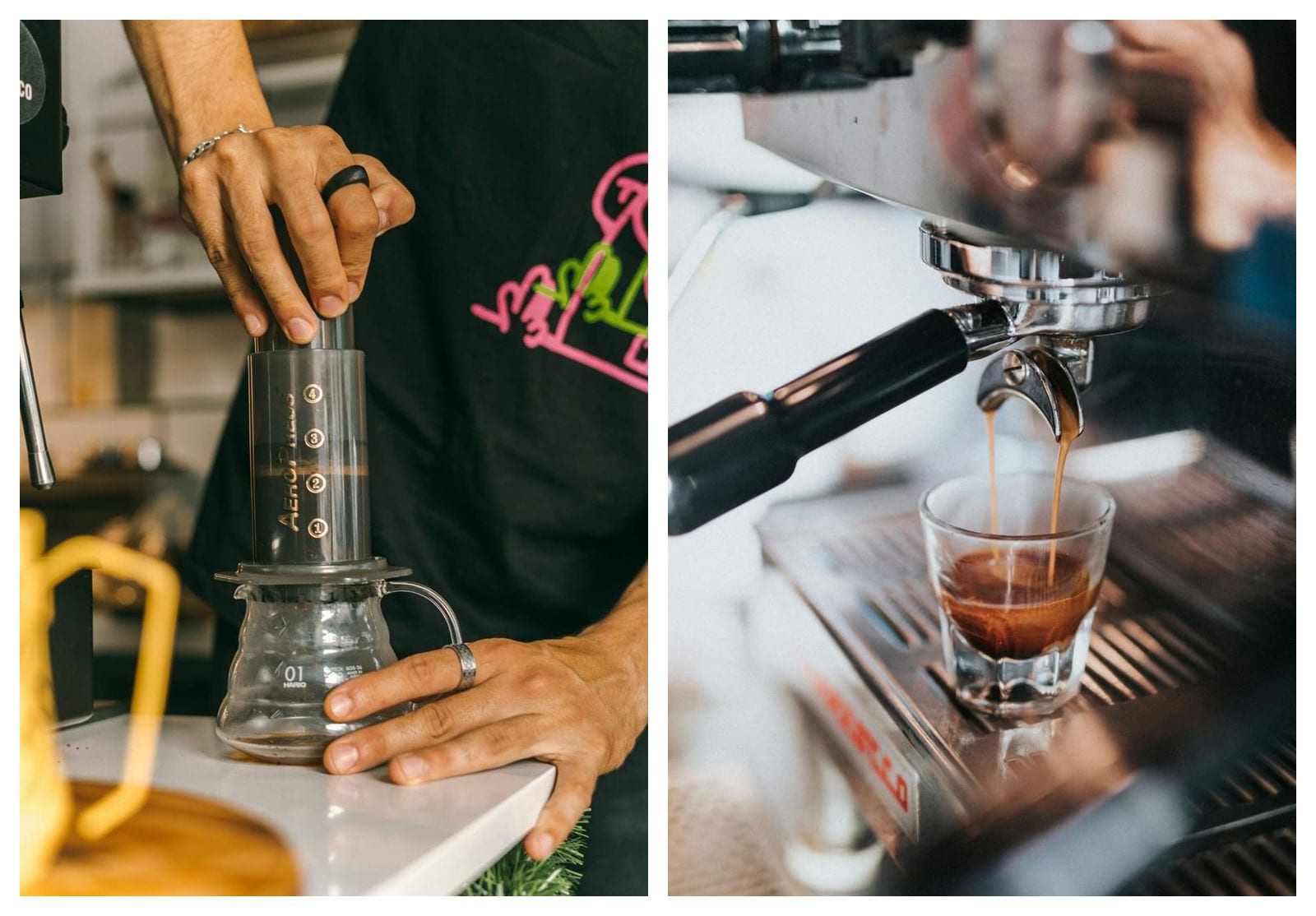
Two ways to a strong cup: hand pressure through a filter, or 9 bar through a puck. · Photos by cafeconcetto, and Nathan Dumlao on Unsplash
The AeroPress and an espresso machine are not the same thing, and no recipe makes them the same thing. An espresso machine pulls a shot at 9 bar through finely ground, tamped coffee in 25 to 30 seconds: a small, intensely concentrated brew with crema. The AeroPress uses gentle hand pressure, a paper or metal filter, and a short steep for a clean, versatile cup in one to two minutes. Get the espresso machine if true espresso (crema, intensity, that mouthfeel) is what you want and you will invest in both the machine and the grinder it needs. Get the AeroPress if you want a strong, fast, excellent cup at home for under $50 without chasing that specific espresso experience. The honest question is whether you need real espresso, or just a strong, concentrated cup.
What actually separates these two methods
The gap between an AeroPress and an espresso machine is larger than the price difference suggests. They are different categories of brewer that happen to produce coffee in a similar volume.
Espresso is defined by pressure: water forced through a compacted puck of finely ground coffee at around 9 bar, producing roughly 25ml (0.8 fl oz) to 50ml (1.7 fl oz) of concentrated coffee in 25 to 30 seconds (Wikipedia, "Espresso"). The heritage Specialty Coffee Association of America (SCAA) definition framed that pressure at 9 to 10 atmospheres; that is a historical reference point, not a live Specialty Coffee Association (SCA) espresso standard. The 2017 Barista Guild of America survey found working practice clustered around an 18g (0.63oz) to 20g (0.71oz) dose in, about 36.5g (1.29oz) out, a roughly 1:2 ratio, and pressure nearer 8.5 to 9 bar (SCA, "Defining the Ever-Changing Espresso"). That pressure is what creates crema, the reddish-brown emulsified foam that sits on top of a properly pulled shot. Crema is not just aesthetic: it carries aromatic compounds and contributes to the texture of the shot in a way that lower-pressure methods cannot replicate. Our house espresso is a double at 18g (0.63oz) in and 36g (1.27oz) out, a 1:2 ratio, water at 93°C (199°F), pulled in about 25 seconds.
The AeroPress generates its pressure by hand. Alan Adler, the AeroPress's inventor, calculated that pressure under normal use at roughly 0.25 to 0.5 bar (AeroPress, "AeroPress Espresso"), a fraction of what a pump machine produces, and that difference is not a minor variable: it is the physical reason the AeroPress cannot produce crema, cannot replicate espresso's mouthfeel, and cannot extract coffee the way 9-bar pressure does. The AeroPress brew is excellent on its own terms, and with a fine grind and a firm press you can produce a concentrated shot that works as the base for milk drinks. But calling it espresso is inaccurate, and expecting it to taste like espresso will lead to disappointment.
What separates them beyond pressure is process flexibility. An espresso machine is optimized for one specific output: a properly extracted shot, pulled within a narrow window of time, grind, dose, and pressure. Everything about the machine and the technique is calibrated to that target. The AeroPress is a variable-process brewer: you can change the grind, the temperature, the steep time, the filter type, and the pressing speed across a wide range, and each combination produces a meaningfully different cup. It is a tool for experimentation; an espresso machine is a tool for precision repetition of a specific output. As Adler put it, "there's just an unlimited amount of ways you can use it" (Sprudge, "A Good, Single Serve Coffee For Myself"). That flexibility is why the AeroPress supports its own World AeroPress Championship: the 2023 edition drew more than 5,000 competitors across 178 events (AeroPress, "About").
When an AeroPress earns its place
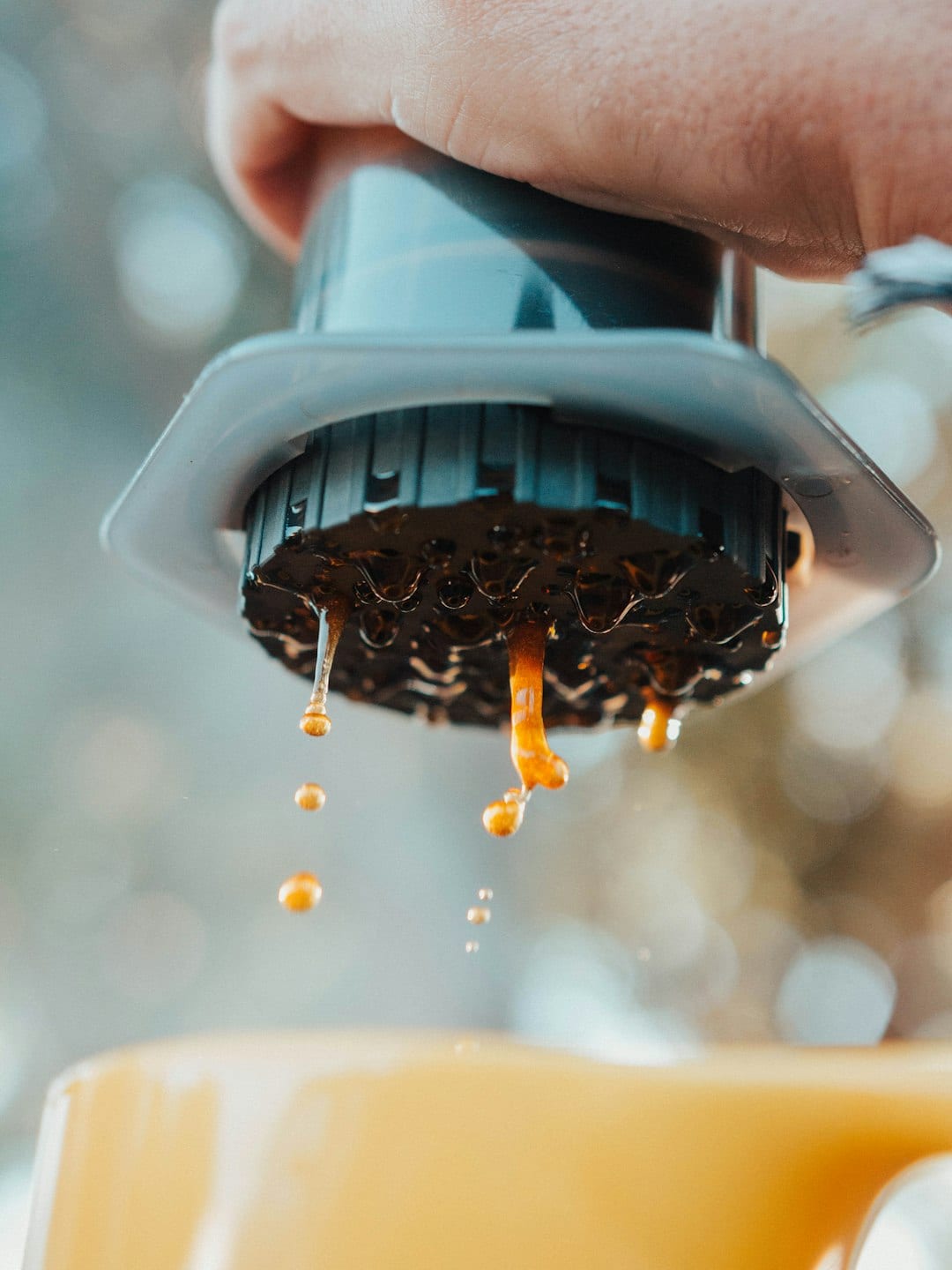
The AeroPress earns its place on three counts: price, forgiveness, and portability.
On price: the AeroPress Original lists at $39.95 (AeroPress, "Original"), so the brewer alone grounds near $40; the complete setup with paper filters and a basic burr grinder runs $75 to $120. A capable espresso machine with the grinder it requires to perform well costs $500 to $1,500 for a setup that produces genuinely good shots at home. The gap is not incidental. It reflects the engineering required to generate and maintain 9 bar of pressure consistently, the precision tolerances in a quality espresso grinder, and the skill investment required to pull a properly extracted shot. For a brewer that produces a strong, excellent cup without that investment, the AeroPress is effectively unmatched at its price.
On forgiveness: the AeroPress is the most error-tolerant manual brewer in common use. A grind that is slightly off, water a few degrees cooler than intended, or a steep time that runs long all produce a cup that is still very drinkable. Espresso has almost no forgiveness: a grind that is one step too fine causes channeling and a harsh, unevenly extracted shot; a grind one step too coarse and the shot runs too fast and tastes sour and thin. The margin of error at 9 bar is narrow enough that many home espresso setups need meaningful dialing-in time before shots stabilize.
On portability: the AeroPress Original is plastic, light, and tough enough to go in a bag without worry (glass and stainless steel versions exist too, at a much higher price). Any model needs only a way to boil water and cleans up in one motion. An espresso machine stays on the counter, requires a power source, and weighs several kilograms. For travel, office brewing, or anywhere that is not your own kitchen, the AeroPress has no competitor at its price.
A typical AeroPress concentrate recipe, the one closest to espresso-style output, runs as follows: 18g (0.63oz) to 20g (0.71oz) of coffee, 50ml (1.7 fl oz) to 60ml (2 fl oz) of water at 90°C (194°F) to 95°C (203°F), fine grind (closer to espresso than to pour over), 30 to 45 second steep, then a firm, slow press over 20 to 30 seconds. That is a deliberate departure from our AeroPress house recipe, which runs 15g (0.53oz) to 225ml (7.6 fl oz) at 85°C (185°F) for a longer, cleaner cup. The concentrate version gives you a small, dense shot that you can drink straight, dilute with hot water into an Americano-style drink, or use as the base for a milk drink. It will not have crema. It will taste concentrated, slightly syrupy, and strong.
The honest downside: the AeroPress makes one cup at a time. It produces a strong cup, but not espresso. And if the specific ritual, the tamping, the shot-pulling, the crema, the machine itself, is part of what you want, the AeroPress cannot provide that regardless of recipe.
When an espresso machine is the right call
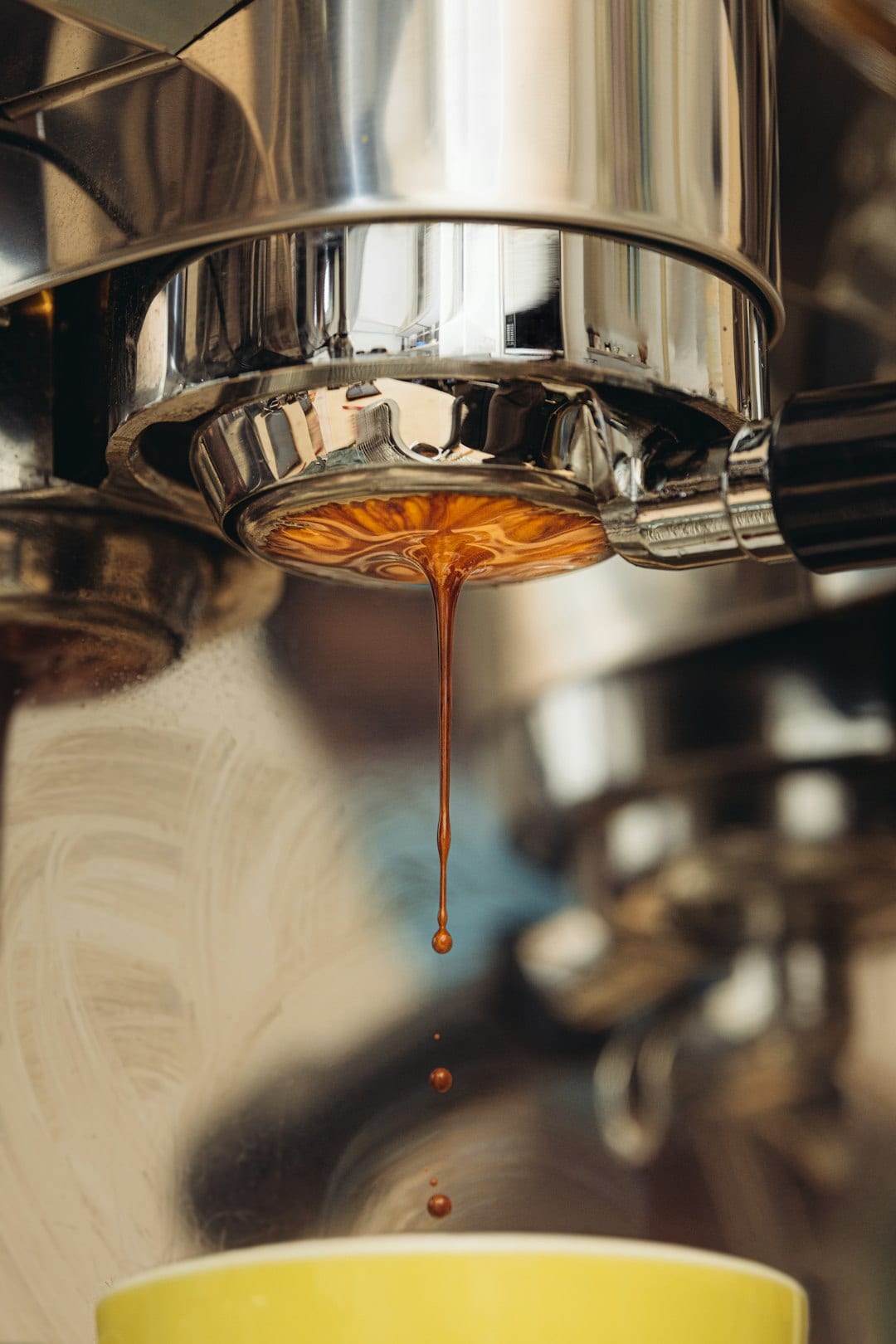
An espresso machine is the right call when you want the actual thing: a properly extracted shot with crema, the specific mouthfeel and sweetness that 9 bar of pressure produces, and the ability to make milk-based drinks (cappuccino, flat white, latte) from a proper concentrated base.
At home, espresso machines divide into two meaningful categories.
The first is semi-automatic machines, where you grind, dose, tamp, and pull the shot yourself. The machine controls pressure and temperature; you control everything else. This is where most of the learning happens. A capable entry-level semi-automatic machine, the Breville Bambino, the DeLonghi EC9155, or the Rancilio Silvia, costs $200 to $750. To pull consistently good shots from one of these, you also need a capable espresso grinder, which adds $150 to $400 for an entry-level electric burr grinder capable of the fine, consistent grind espresso requires (a Timemore, a DF64, a Niche Zero at the higher end). The total entry cost for a semi-automatic setup that reliably produces good espresso is $400 to $1,150.
The second is super-automatic machines, where the machine grinds, doses, tamps, and pulls the shot for you. A button press produces a cup. These cost $400 to $1,500 for consumer-grade models. They sacrifice some of the ceiling a skilled semi-automatic operator can reach but they are more consistent for households that want espresso without the daily skill investment.
The honest downside of espresso at home is the grinder cost and the dialing-in time, more than the machine itself. A cheap grinder paired with an expensive machine produces poor shots. The espresso grinder is the variable that determines whether your machine performs at its ceiling or at a fraction of it. And dialing in, finding the exact grind setting, dose, and tamp pressure that produces a good shot on your machine with your beans, takes time. A bag of beans is sometimes sacrificed to dialing in a new grind setting. How to make espresso at home walks through the four numbers that matter and which one to adjust first.
What justifies this investment is the ceiling. A properly pulled shot on a well-maintained semi-automatic machine is something no other home brewing method produces. The crema, the sweetness, the viscosity, the foundation it provides for a properly steamed flat white or a cortado made the way a good cafe makes it, are not replicable any other way at home.
How do these methods actually compare side by side
Here is the same information in one table.
| What you are comparing | AeroPress | Espresso machine |
|---|---|---|
| Brew time | 1 to 2 minutes | 25 to 30 seconds (plus warm-up time) |
| Hands-on effort | Low to medium. Very forgiving. | High. Grind, dose, tamp, pull, diagnose. |
| Pressure | Low, hand-generated | 9 bar, pump-driven |
| Cup style | Concentrated, clean to full-bodied; no crema | Intensely concentrated, viscous, crema layer |
| Grind | Medium to fine | Very fine, tightly consistent |
| Best for | Strong, flexible home brewing; travel; beginners | True espresso; milk drinks; precision repetition |
| Volume | 1 cup per press | 25ml (0.8 fl oz) to 50ml (1.7 fl oz) per shot |
| Portability | Very high. Fits in a bag. | None. Counter-bound, power required. |
| Cleanup | Easiest. Puck pops out, rinse plunger. | Medium. Portafilter, group head, steam wand. |
| Produces crema | No | Yes, when properly extracted |
| Entry cost (brewer only) | $35 to $50 | $200 to $1,500 |
| Entry cost (full setup) | $75 to $120 | $400 to $1,500 and up |
| Skill floor | Low | High |
| Skill ceiling | Medium | Very high |
Which should you pick
If you want true espresso, crema included: Get an espresso machine. The AeroPress cannot produce it, and a recipe that claims to make "AeroPress espresso" is producing something in the neighborhood of espresso, not the thing itself. If the crema, the mouthfeel, and the specific flavor profile of a properly pulled shot are what you are after, there is no alternative.
If you want a strong, concentrated cup for under $100: Get an AeroPress. For most people who say they want espresso at home, what they actually want is a small, strong cup that tastes good on its own or as the base for a milk drink. The AeroPress delivers this with less cost, less skill, and less cleanup than any entry-level espresso machine.
If you make milk drinks every morning: The answer depends on whether you want real steamed milk or not. An AeroPress concentrate poured over heated (not steamed) milk produces a decent latte-style drink. For properly microfoamed milk, which is what a flat white or cappuccino requires, you need a steam wand, which means an espresso machine. If the texture of the milk matters as much as the coffee, pick the espresso machine.
If you are a beginner who wants to learn about coffee: Start with the AeroPress. The skill floor is low enough to produce a good cup immediately, and the recipe flexibility means you can experiment with grind, temperature, and technique over months without the cost and frustration of espresso dialing-in. Espresso is a high-skill, high-cost commitment that rewards experience. The AeroPress builds that experience without the stakes. If you are weighing it against another compact brewer rather than against a machine, AeroPress vs Moka Pot is the closer comparison.
If you already own an AeroPress and you are considering upgrading to espresso: This is the most common version of this question. The honest answer is: if you find yourself consistently wishing the AeroPress cup had more intensity, a different texture, or real crema, the espresso machine is the right next step. If the AeroPress cup satisfies you and you just want the machine for the aesthetic or the ritual, the ongoing cost and dialing-in time may not be worth it.
If you travel or brew outside your kitchen: AeroPress, without any qualification. An espresso machine cannot travel. The AeroPress can go anywhere you can boil water.
If you want the best possible cup from light or single-origin beans: Neither method is the first choice. A pour over shows light roast character more clearly than the AeroPress, and espresso tends to amplify dark, bitter notes in a way that obscures the origin flavors of lighter roasts. For single-origin light roasts, pour over vs French press vs AeroPress compares the three methods side by side.
What gear do you actually need
For AeroPress: The plastic brewer at $35 to $50 includes paper filters; the glass and steel models run $170 to $250. An official metal filter disc at about $10 to $20 eliminates filter cost and adds body. Any kettle works, though a temperature-controlled one ($60 to $150) is useful since AeroPress recipes span a wide water temperature range. A digital scale at $15 to $25 is recommended. For a manual burr, the Timemore Chestnut C3s Pro is a strong pick around $100; entry-level electric burr grinders run $150 to $200.
For espresso: The machine is not the only cost. A capable semi-automatic entry-level machine costs $200 to $750. A super-automatic costs $400 to $1,500. The grinder is the second major cost and cannot be skipped: espresso requires a grinder capable of a very fine, highly consistent grind, and the grinders bundled with budget machines are rarely adequate. A capable espresso grinder starts at $150 to $200; the Baratza Encore ESP sits in that entry band for espresso-capable grinding, and options scale to $400 to $700 for grinders that produce genuinely excellent results (Niche Zero, DF64). Filtered or low-mineral water matters more for espresso than for most methods, as scale builds up in the boiler and affects machine performance over time. A basic descaling routine and a water filter ($20 to $40) extend machine life significantly.
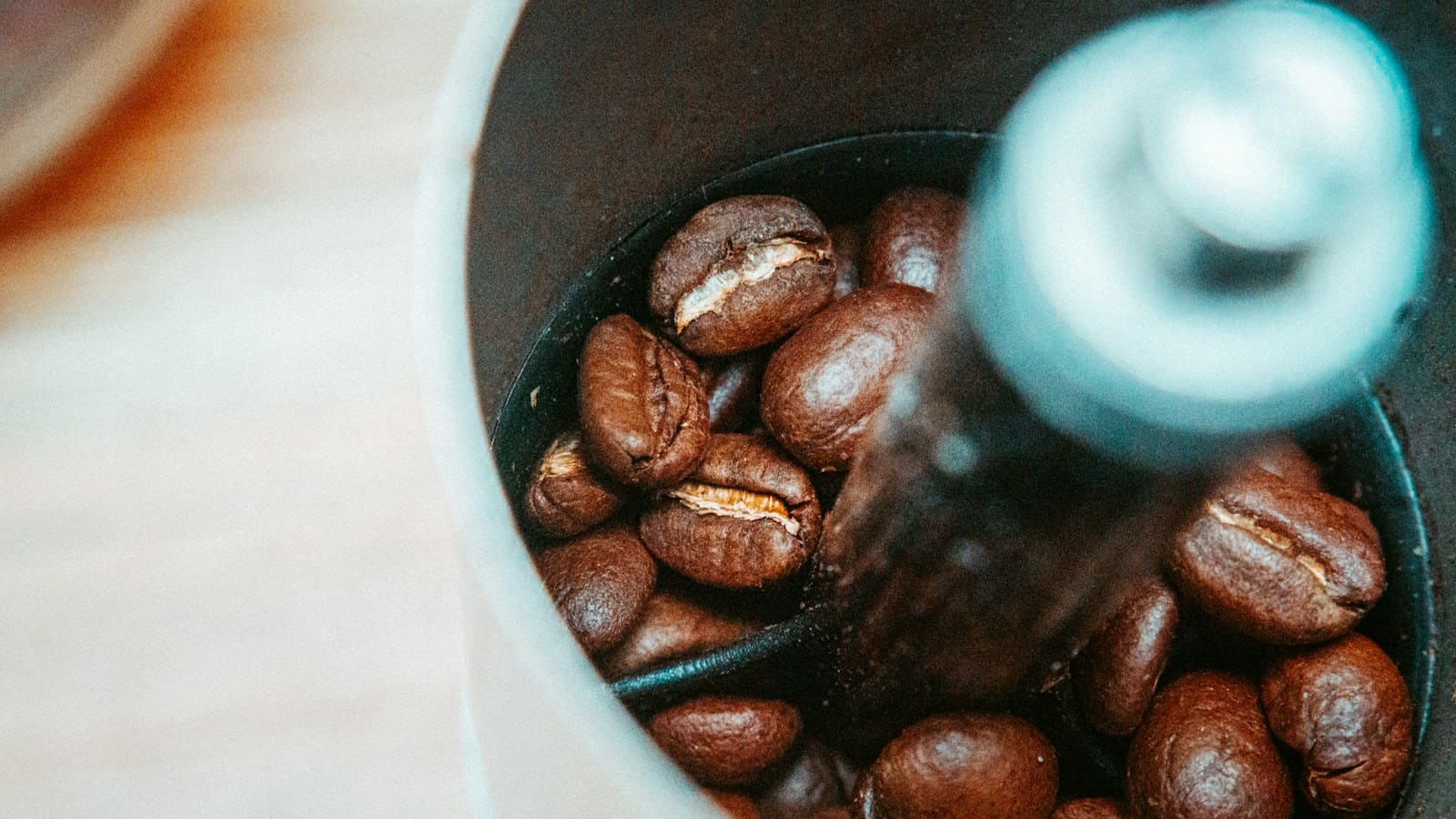
The shared variable: The grinder. A blade grinder is not suitable for espresso under any circumstances, and it produces inconsistent results for AeroPress despite the method's forgiveness. "As a grinder's burrs dull with use, extraction levels will decrease," as Scott Rao, coffee consultant and author of The Professional Barista's Handbook, puts it (Rao, "Using Extraction Levels To Rate Grinders"), which is why burr condition deserves more attention than most home setups give it. For both methods, the grinder matters more than any other accessory, and is your grinder the problem? walks through how to tell before you spend.
Frequently asked questions
Can the AeroPress make real espresso?
No. Espresso is defined by around 9 bar of pressure forcing water through a compacted coffee puck in 25 to 30 seconds. The AeroPress generates a small fraction of that by hand. Maciej Kasperowicz, Director of Coffee at the US subscription service Trade Coffee, puts it plainly: "You won't be able to extract an actual shot of espresso" (Perfect Daily Grind, "How can consumers make better espresso at home?"). The result is a strong, concentrated cup that can function as an espresso substitute in recipes, but it does not produce crema and does not replicate espresso's extraction profile or mouthfeel. The AeroPress is excellent at what it does; what it does is not espresso.
Is an espresso machine worth it for home use?
It depends on what you mean by worth it. If you want the specific experience of pulling a properly extracted shot with crema and using it as the base for milk drinks with properly steamed milk, the machine is the only way to get there at home. The investment, typically $400 to $1,500 for machine and grinder, is justified by daily use over several years. If you want a strong, excellent home coffee without the skill investment or the cost, the AeroPress delivers more value per dollar spent.
How long does it take to get good at espresso at home?
Dialing in a new machine takes daily practice: finding the grind setting, dose, and tamp that produce a good shot on your equipment with your beans is not a one-session job. During that time, some coffee will be wasted to bad shots. The variables are grind size, dose, tamp pressure, and shot time, and they interact: changing one often requires adjusting another. Once dialed in, a consistent semi-automatic shot is reproducible daily. Switching to a new bag of beans typically requires re-dialing.
What is the closest AeroPress recipe to espresso?
The closest output comes from a fine grind (one or two steps coarser than espresso), 18g (0.63oz) to 20g (0.71oz) of coffee, 50ml (1.7 fl oz) to 60ml (2 fl oz) of water at 90°C (194°F) to 95°C (203°F), a 30 to 45 second steep, and a slow, firm press over 20 to 30 seconds. The result is a small, dense, concentrated shot with no crema. It works as a base for milk drinks and tastes strong and syrupy on its own. That cup is still not espresso. Among AeroPress recipes, this one is the most likely to satisfy someone who wants a strong, concentrated cup.
Do I need a special grinder for espresso?
Yes. Espresso requires a burr grinder capable of a very fine, highly consistent grind and, critically, fine enough adjustment steps to dial in the shot precisely. Most all-purpose burr grinders do not have fine enough steps at the espresso end of the range. Grinders specifically designed for or rated for espresso, such as the Timemore Sculptor, the Baratza Sette 30, or the Niche Zero, are built with the precision espresso requires. A blade grinder or a generic low-cost burr grinder will not produce repeatable espresso regardless of the machine.
Can I make a latte or cappuccino with an AeroPress?
You can make a latte-style drink by pouring AeroPress concentrate over heated milk. The result is a strong coffee with milk. What you cannot replicate without a steam wand is microfoamed milk, the fine, velvety texture that gives a flat white or cappuccino its specific mouthfeel. A handheld milk frother ($10 to $15) produces a rougher foam that works for a home latte but is not the same as steam wand microfoam.
Where to start
If you are deciding between the two, the fastest way to know which one you actually want is to ask a simpler question: have you ever had a flat white or espresso at a good cafe and spent the rest of the day thinking about the texture of the cup? If yes, you are an espresso person, and the machine investment is worth taking seriously. If you are mostly thinking about the strength of the coffee rather than its specific character, the AeroPress will satisfy you at a fraction of the cost.
If you choose the AeroPress, the ramp-up is fast: most people produce a cup they genuinely enjoy within the first three or four brews. What shortens that path is writing down each brew: grind setting, dose, water temperature, steep time, and how the cup tasted. That's why we built iCoffee: you log the brew, and the AI Barista reads your history and tells you the exact adjustment for the next cup.
As an Amazon Associate, iCoffee may earn from qualifying purchases.
About the author
Taissa Conde
Co-founder of iCoffee
Make your next cup count.
iCoffee is the app that helps you brew better coffee at home, every day.
Get the appdownloadKeep reading
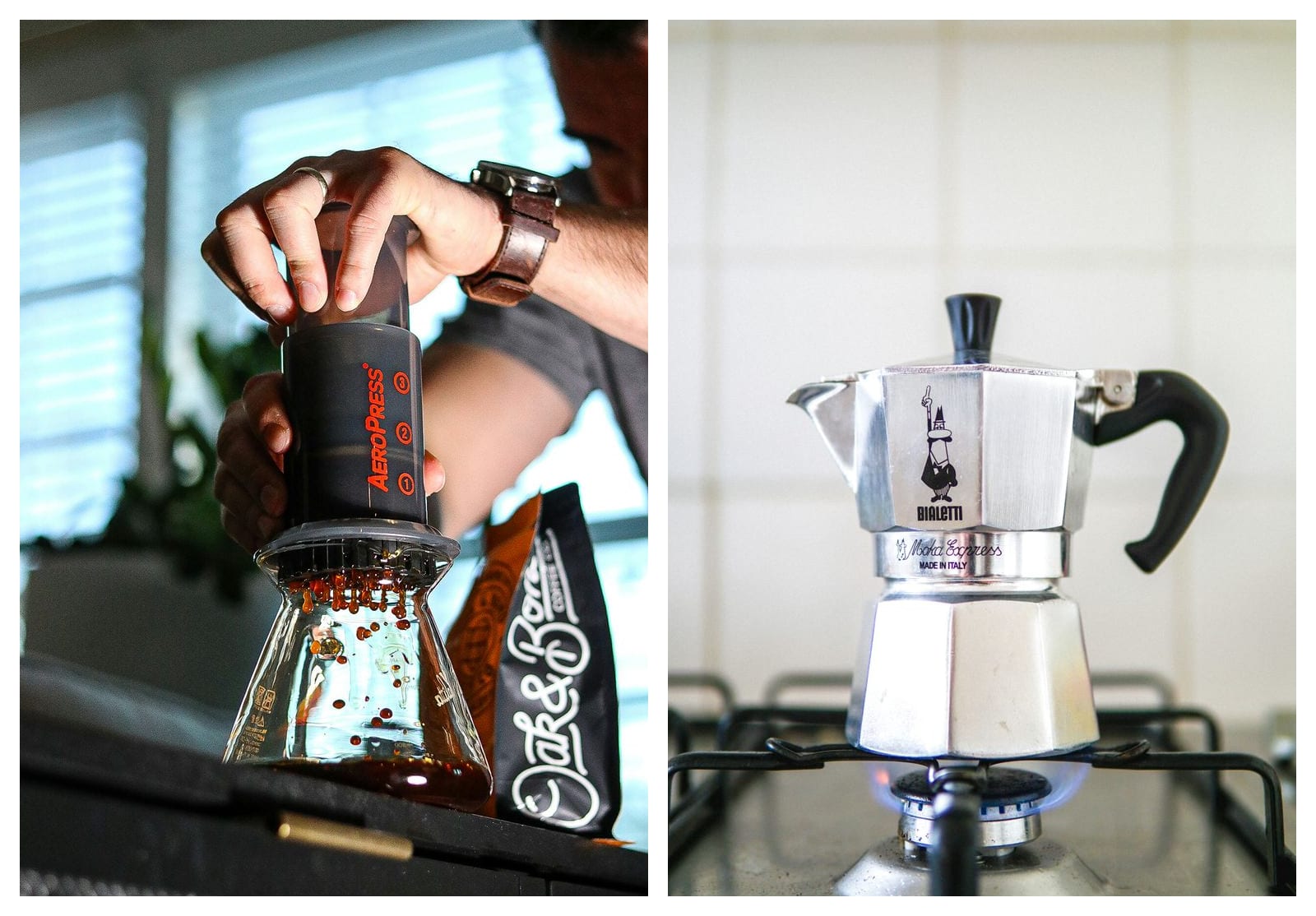
AeroPress vs Moka Pot: Which One Should You Buy?
Two compact brewers, two very different cups. What separates the AeroPress and the Moka Pot on flavor, effort, cost, and who each one is actually built for.

Pour Over vs Drip Coffee: Is the Upgrade Worth It?
A pour over gives you the temperature, the pour and the grind to adjust. A drip machine gives you a button. Which one suits you, on flavor, effort and cost.
French Press vs Drip Coffee: Which One Should You Use?
Drip machine or French press: the cup, the effort, the cost and the honest trade-offs compared, plus a clear recommendation for each kind of home brewer.
What Is Coffee Extraction? The Science Behind Every Good and Bad Cup
What coffee extraction actually means, the chemistry behind bitter and sour cups, and the four variables that decide whether every brew tastes good or off.