

How to Make Espresso at Home: Recipe + Fixes
How to make espresso at home: the recipe, the four numbers that shape a shot, what to adjust first when one is off, and what to do without a machine.

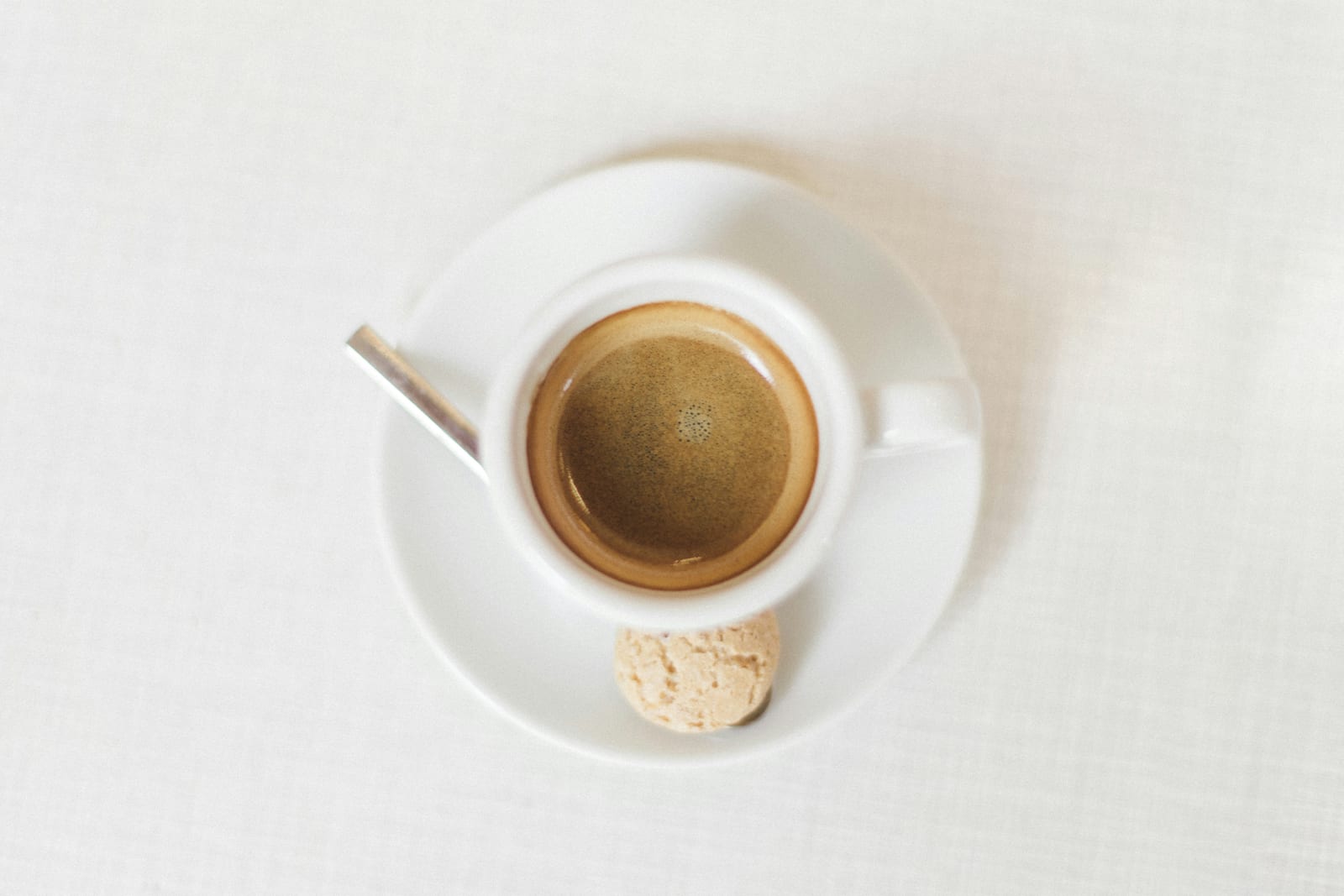
An espresso in the cup. The golden ring of crema is the visible signal that pressure, grind, and dose are roughly aligned. · Photo by Paul Hanaoka on Unsplash
Real espresso requires a pump espresso machine that generates around 9 bar of pressure. The four numbers that matter for a double espresso: 18g (0.63oz) dose, 36g (1.27oz) yield (a 1:2 ratio), 25 seconds extraction time, 93°C (199°F) water temperature. Use beans that are 7 to 21 days off roast. The grind is the single biggest variable, and adjusting it is almost always the right first move when something tastes off. Bitter and slow? Go coarser. Sour and fast? Go finer. Without a 9-bar machine you can't make real espresso, but a moka pot pulls about 1 to 2 bar of pressure and gets you a strong, espresso-adjacent cup.
When you bring home a new espresso machine, the manual gives you "how to press the buttons." It doesn't give you "this is the espresso to actually make." That gap is most of why home espresso disappoints in the first month.
The recipe below, derived from James Hoffmann's puck-prep work, is the one I landed on after trying several others and failing with most of them. It's also the one I built into iCoffee as the default espresso method. 18g (0.63oz) of coffee, 36g (1.27oz) of espresso in the cup, water around 93°C (199°F), pulled in about 25 seconds. Fine grind, level tamp, beans between 7 and 21 days off roast. Four numbers. Four steps. The rest of this article walks through what each number does and which one to adjust first when the shot is off.
What is espresso, exactly?
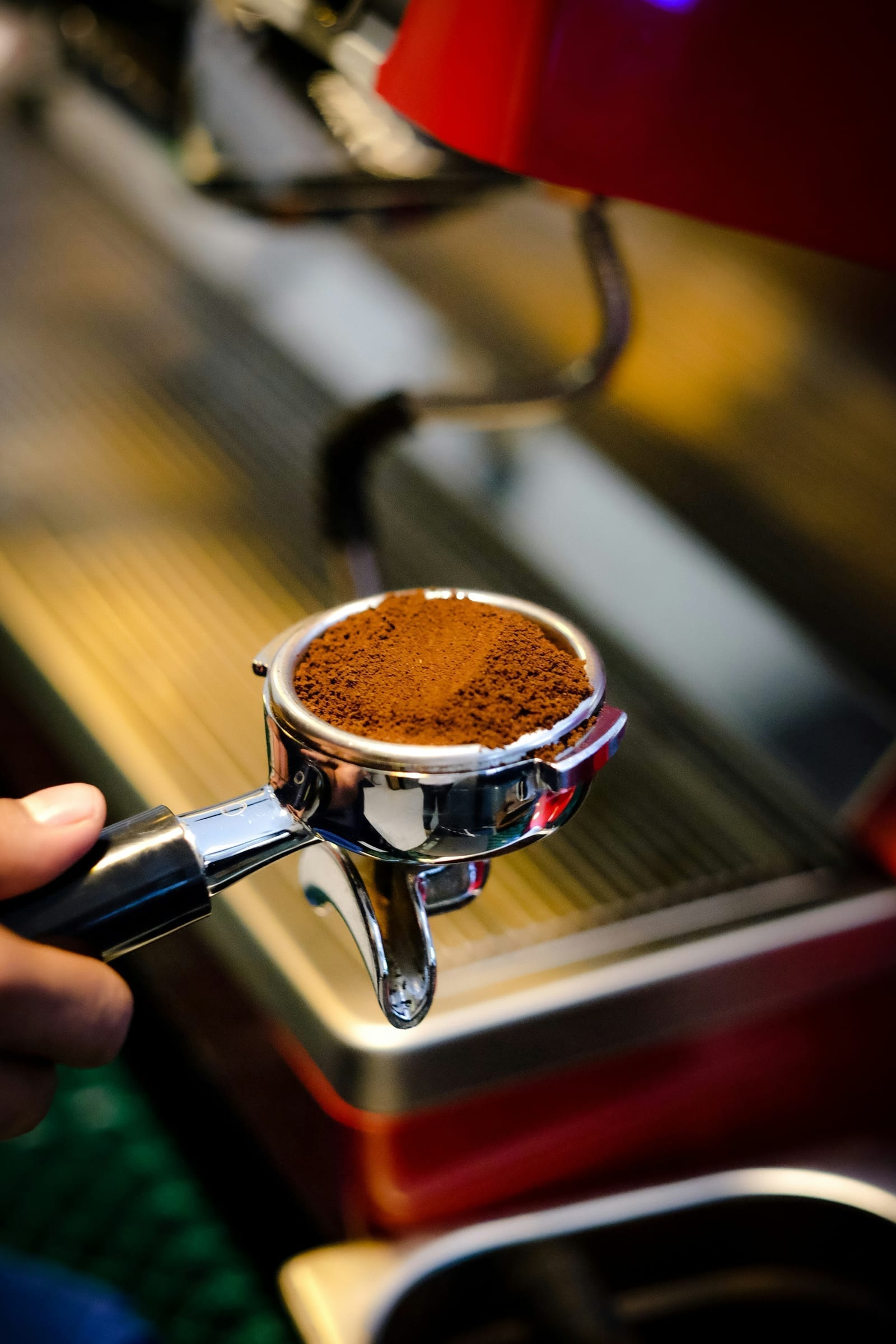
Espresso isn't just strong coffee. It's a specific extraction method defined by pressure: water at around 9 bar (130 psi) forced through a tightly compacted puck of fine coffee, producing roughly 25ml (0.8 fl oz) to 50ml (1.7 fl oz) of concentrated coffee in 25 to 30 seconds. The 9-bar standard is the academic reference value (Wikipedia, "Espresso"), and it's the variable that separates espresso from every other brew method.
Pressure is also what creates the crema, the brown foam on top of the shot. A French press steeps. A pour-over drips. Espresso pushes, and the pushing forces oils and dissolved gases into the cup that you wouldn't get any other way.
A single shot is about 30ml (1 fl oz) of liquid and contains roughly 63.6 mg of caffeine for "espresso, restaurant-prepared" (IFIC Caffeine Calculator, based on USDA FoodData Central). A double shot, which is what most modern home machines and almost every cafe drink are actually built around, is about 60ml (2 fl oz) and roughly 127 mg of caffeine. Less caffeine than a typical mug of drip coffee in absolute terms, more caffeine per millilitre by a wide margin.
The four numbers to set before your first pull
Every espresso recipe in the world is a variation of four numbers: dose, yield, time, and temperature. Fix these, stop changing them all at once, and every other adjustment becomes diagnosable.
Dose: 18g (0.63oz) of coffee in the basket. Modern double-shot baskets are designed for 18g (0.63oz), give or take a gram. Less than 17g (0.6oz) and water finds gaps in the puck and channels through. More than 20g (0.71oz) and there's no headspace, the screen scrapes the puck, and the shot drowns. Weigh your dose. Eyeballing it is the single most common reason new home baristas can't reproduce a shot.
Yield: 36g (1.27oz) of espresso in the cup, for a 1:2 ratio. This is the conservative default that works for almost every commercially-roasted bean. Scott Rao argues that "standard, popular ratios" shouldn't be applied blindly: the right ratio depends on the grinder, the bean, and the TDS target (Rao, "How to Choose a Dose and Brewing Ratio"). For a beginner, though, 1:2 is the starting point that lets you learn what each variable does before adding more variables on top.
Time: 25 seconds from first drop to your target yield. Not 25 seconds from when you press the brew button, which usually includes some preinfusion. Time from when you see espresso in the cup. If you hit 36g (1.27oz) at 18 seconds, the grind is too coarse. If you're at 32 seconds with only 20g (0.71oz) in the cup, too fine.
Temperature: 93°C (199°F). Most modern home espresso machines have a stable enough boiler or thermoblock to land within a degree of this. Older single-boiler machines drift more, and dedicated forums have entire threads on "temperature surfing" them.
The variable hiding in plain sight: bean age. For espresso specifically, target beans 7 to 21 days off roast. Too fresh (under a week) and the beans are still degassing CO₂, which causes channeling and tastes harsh. Too old (past three weeks for espresso specifically) and the oils have oxidized, the crema thins, and the shot loses body. Mark Michaelson, Head Roaster at Onyx Coffee Lab, has said that they typically like coffees to be five to seven days off roast for espresso purposes (Perfect Daily Grind, "Why Does Coffee Degas?"). The window is narrower than for filter coffee, and it's the single variable most beginners ignore. If your espresso has tasted off for three weeks straight, check the roast date on the bag before changing anything else.
How to pull an espresso shot at home, step by step
Four steps. Same order every time. The discipline is in not skipping any of them.
1. Preheat the machine and the portafilter. Most home machines need 15 to 20 minutes from cold start to be temperature-stable. Lock the empty portafilter into the grouphead while it warms. A cold portafilter pulls heat out of the water and drops your shot temperature by 2 to 3 degrees, which is the difference between balanced and sour.
2. Grind 18g (0.63oz) of coffee very fine, straight into the basket. Fine for espresso means somewhere in the 200 to 300 micron range, closer to powdered sugar than table sugar. The exact dial setting depends on your grinder, the bean, and even the humidity on the day. Start at your grinder's recommended espresso setting and adjust based on how the shot pulls.
3. Distribute and tamp evenly. This is the step everyone underrates. Tap the basket on the counter to settle the grounds, or run a thin needle (the Weiss Distribution Technique) through the puck to break up clumps. Then tamp with about 15 kg of force. Level matters far more than exact pressure. Hoffmann's point in How I Make Espresso is sharp on this: most of the tamp's job is just creating a flat, level puck surface, and once it's flat, more pressure is mostly theatre (Hoffmann, "How I Make Espresso"). Consistency between pulls matters more than crushing the puck.
4. Start the extraction and aim for 36g (1.27oz) in about 25 seconds. Put your scale and timer under the cup. Hit brew. Watch the spout. First drop should appear around 8 to 10 seconds in. Stop the shot when the scale reads 36g (1.27oz), regardless of what the timer says. The timer is information; the yield is the rule.
The numbers above are the espresso method built into iCoffee. Same 18g (0.63oz) dose, same 36g (1.27oz) yield, same 93°C (199°F) target, same 25-second extraction, same tamping principle from the same Hoffmann video. If you'd rather have a timer running through the four steps at the counter than keep this page open between pulls, the app walks through the same procedure with a tip surfaced on each step.
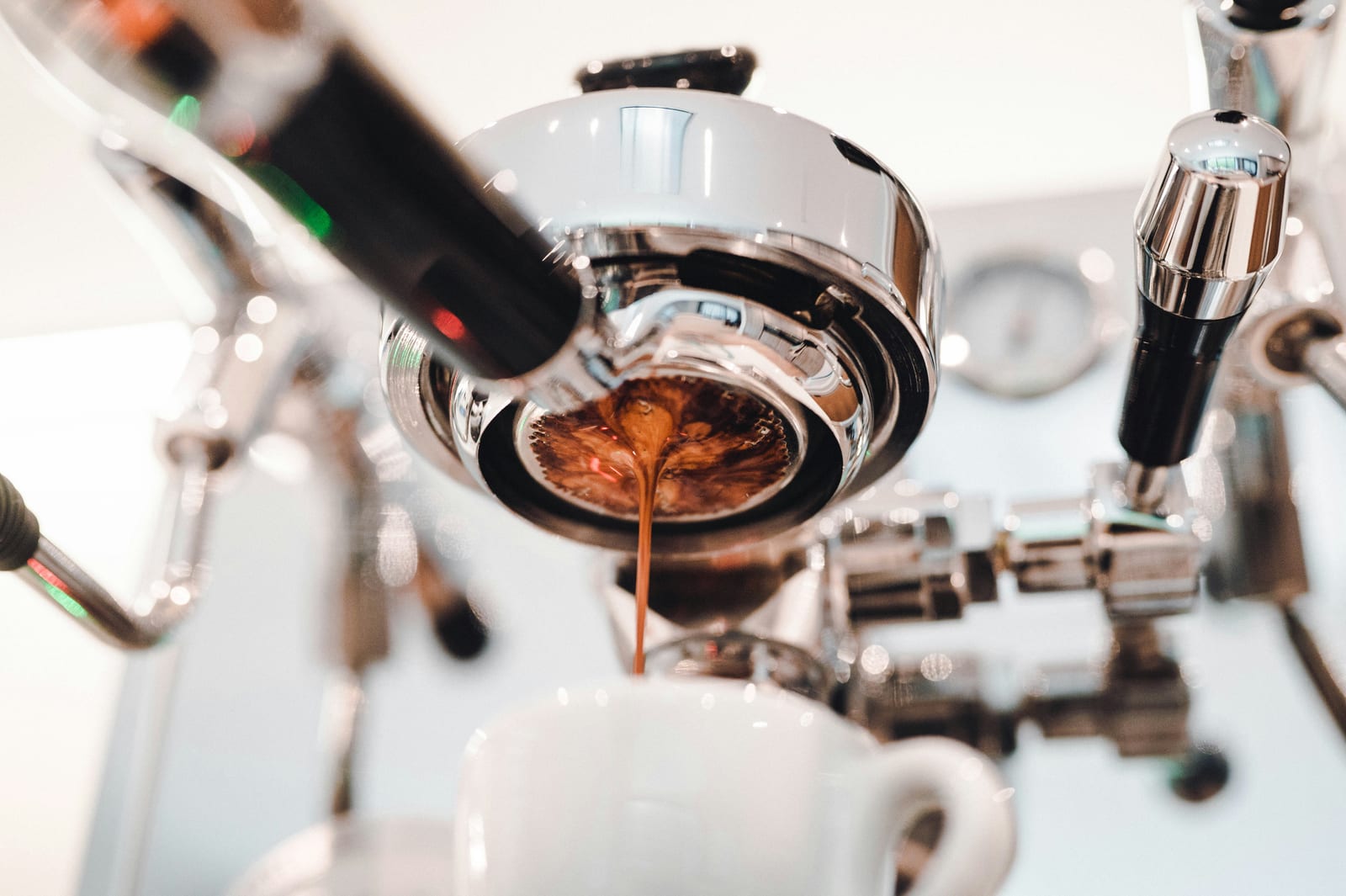
What to adjust first when the shot is off
The trap is changing three variables at once, getting another bad shot, and now you have no idea which change did what. The discipline is to change one variable at a time, and to know which one to change first.
Step 1: Look at the time. If the shot ran outside 22 to 30 seconds for a 1:2 ratio, the grind is almost always the problem. Faster than 22 seconds means too coarse. Slower than 30 seconds means too fine. Adjust the grinder by one or two notches and pull again.
Step 2: Then taste. If the time was inside the window but the shot still tastes off, the diagnosis moves to taste. Bitter and ashy usually means over-extracted: pull a shorter shot (lower yield), or go slightly coarser. Sour and sharp usually means under-extracted: pull a longer shot, or go slightly finer. Watery and weak with no body usually means the dose is too low or the grind is way too coarse. Vanessa's piece on why coffee tastes bitter, sour, or weak covers each of these in more depth, and the diagnostics translate cleanly to espresso.
Step 3: If nothing's working after a dozen adjustments, the grinder is the limit. Espresso is the most punishing brew method for grinders. A grinder that makes excellent filter coffee can still produce too wide a particle distribution to make consistent espresso, because espresso amplifies every inconsistency in the grind. Jonathan Gagné, the astrophysicist behind Coffee Ad Astra and author of The Physics of Filter Coffee, has explained that the smallest particles have a disproportionate impact on how easily water flows through a coffee bed, which is why two grinders set to "the same fineness" can produce wildly different shots (Comunicaffe, "Jonathan Gagné: The Physics of Filter Coffee"). There's a separate article on exactly how to tell if your grinder is the bottleneck before you spend money on an upgrade.
Can you make espresso without a machine? The honest answer
No. Not real espresso. That's the truth most blogs avoid because it's not what you want to hear, but it's the answer that actually helps you decide what to do.
The defining variable for espresso is pressure: about 9 bar. A moka pot generates roughly 1 to 2 bar of pressure (Wikipedia, "Moka pot"). That's somewhere between a ninth and a quarter of espresso pressure. What a moka pot makes is strong, concentrated, espresso-adjacent coffee with no real crema and a heavier, less syrupy mouthfeel. It's a real drink and it's good. It just isn't espresso.
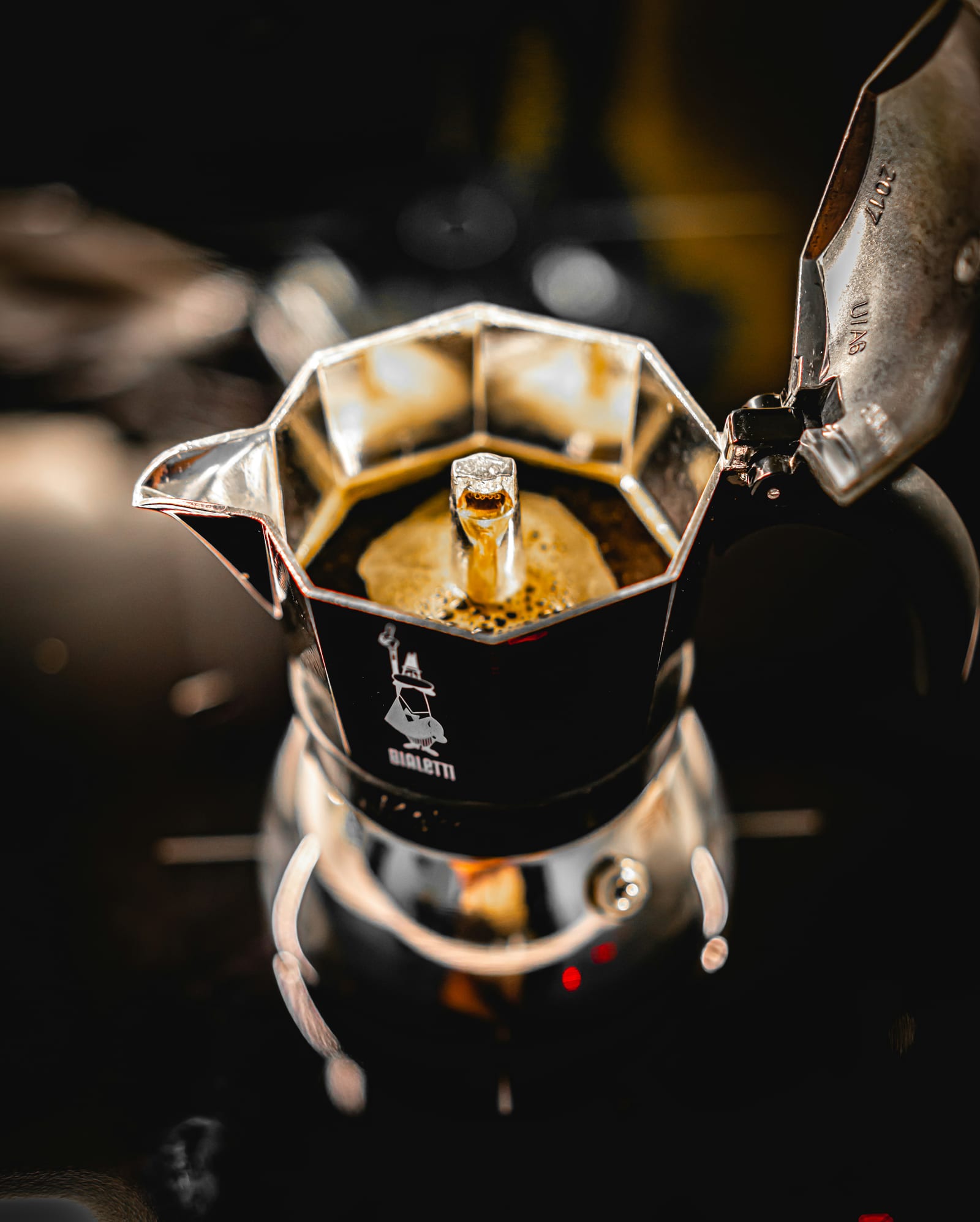
If you don't want to commit to a pump machine yet, the practical alternatives are:
- Bialetti Moka Express (or any moka pot). 6-cup size for a strong morning drink, finer-than-filter grind, low heat, off the heat the moment the chamber starts hissing. Heavy and concentrated, milk-drink compatible.
- AeroPress. With the inverted method and a fine grind, it makes a strong coffee that some people pass off as espresso. It isn't, but it's good, and you can build flat whites with it (AeroPress vs Moka Pot compares these two head to head).
- Manual lever espresso machines (Flair, ROK, Cafelat Robot). These generate real 9-bar pressure through your arm. They're slower than a pump machine and they require more skill, but the result is real espresso, often at a lower price than an entry-level pump machine.
If you've decided the espresso fixation is permanent and a pump machine is in your future, there are a handful of entry-level options that punch above their price. More on those in a future article.
For more on the early days of learning espresso at home, my earlier article walks through the notebook I kept while learning and the lesson it taught me about what your equipment can and can't give you.
Key takeaways
- Weigh both the dose and the yield for every pull. Target 18g (0.63oz) in, 36g (1.27oz) out. Eyeballing either is the single most common cause of irreproducible espresso at home.
- When a shot is off, check the time first. Outside 22 to 30 seconds means the grind needs adjusting before anything else. One or two notches, never five.
- Use beans 7 to 21 days off roast. Too fresh causes channeling and harshness. Too old loses crema and body.
- Tamp level, not hard. Around 15 kg of force, applied evenly. A flat puck matters far more than crushing pressure.
- Without a 9-bar pump machine, you can't make real espresso. A moka pot produces strong, espresso-adjacent coffee. Useful, but a different drink.
Quick reference: shot specs and common espresso drinks
Once you've got the basic double dialed in, you can pull all the variations from the same setup. The differences come down to dose, yield, ratio, and what they taste like.
| Drink | Dose | Yield | Ratio | What it tastes like |
|---|---|---|---|---|
| Ristretto | 18g (0.63oz) | 27g (0.95oz) | 1:1.5 | Concentrated, sweeter, less acidity. Short and intense. |
| Single shot (solo) | 9g (0.32oz) | 18g (0.63oz) | 1:2 | Half the volume of a double. Less common at home. |
| Double shot (doppio) | 18g (0.63oz) | 36g (1.27oz) | 1:2 | The default. Balanced, with body and crema. |
| Lungo | 18g (0.63oz) | 54g (1.9oz) | 1:3 | Longer extraction, more bitter notes, more caffeine, less body. |
| Americano | 18g (0.63oz) + hot water | 36g (1.27oz) + 120ml (4.1 fl oz) water | n/a | Double shot diluted to a long drink. Filter-coffee-like. |
The double is the one to commit to first. Everything else is a variation once you know what good tastes like.
Frequently asked questions
What grind size should I use for espresso at home?
Very fine, somewhere in the 200 to 300 micron range, closer to powdered sugar than table sugar. The exact dial setting depends on your grinder, the bean, and the day's humidity. If the shot runs faster than 22 seconds, go finer. Slower than 30 seconds, go coarser. Adjust one or two notches at a time.
How long should an espresso shot take?
About 25 seconds from first drop to the target yield of 36g (1.27oz) for an 18g (0.63oz) dose. Anything outside 22 to 30 seconds usually points to a grind problem. Faster than 22 seconds means the grind is too coarse; slower than 30 seconds means too fine. The yield is the rule, the timer is information.
Why does my espresso taste bitter?
Bitter usually means over-extraction. The fix is either a coarser grind, a shorter shot (lower yield, like 32g (1.13oz) instead of 36g (1.27oz)), or both. Other causes include water that's too hot (above 95°C (203°F) for darker roasts) and stale beans past 21 days off roast. Try one change at a time and taste again.
Can I make espresso with a moka pot?
Not real espresso. A moka pot produces around 1 to 2 bar of pressure, while espresso requires about 9 bar. What it makes is strong, concentrated, espresso-adjacent coffee with no real crema and a heavier mouthfeel. It's a real drink and it's good. It just isn't espresso.
How fresh should coffee beans be for espresso?
Between 7 and 21 days off roast is the espresso sweet spot. Too fresh (under a week) and beans are still degassing carbon dioxide, which causes channeling and tastes harsh. Past three weeks, the oils oxidize, the crema thins, and the shot loses body. Always check the roast date on the bag.
About the author
Taissa Conde
Co-founder of iCoffee
Make your next cup count.
iCoffee is the app that helps you brew better coffee at home, every day.
Get the appdownloadKeep reading
AeroPress vs Espresso Machine: Which One Is Right for You?
The AeroPress costs $40. An espresso machine costs $200 to $2,000. Here is what you get for the difference, and which one makes sense for your kitchen.
AeroPress vs Moka Pot: Which One Should You Buy?
Two compact brewers, two very different cups. What separates the AeroPress and the Moka Pot on flavor, effort, cost, and who each one is actually built for.

Pour Over vs Drip Coffee: Is the Upgrade Worth It?
A pour over gives you the temperature, the pour and the grind to adjust. A drip machine gives you a button. Which one suits you, on flavor, effort and cost.
French Press vs Drip Coffee: Which One Should You Use?
Drip machine or French press: the cup, the effort, the cost and the honest trade-offs compared, plus a clear recommendation for each kind of home brewer.