

Consistently Good Espresso at Home: The Notebook That Started iCoffee
What 60 espresso pulls in a beginner's notebook taught me about the only variable that actually matters at home, and how that notebook became the iCoffee app.

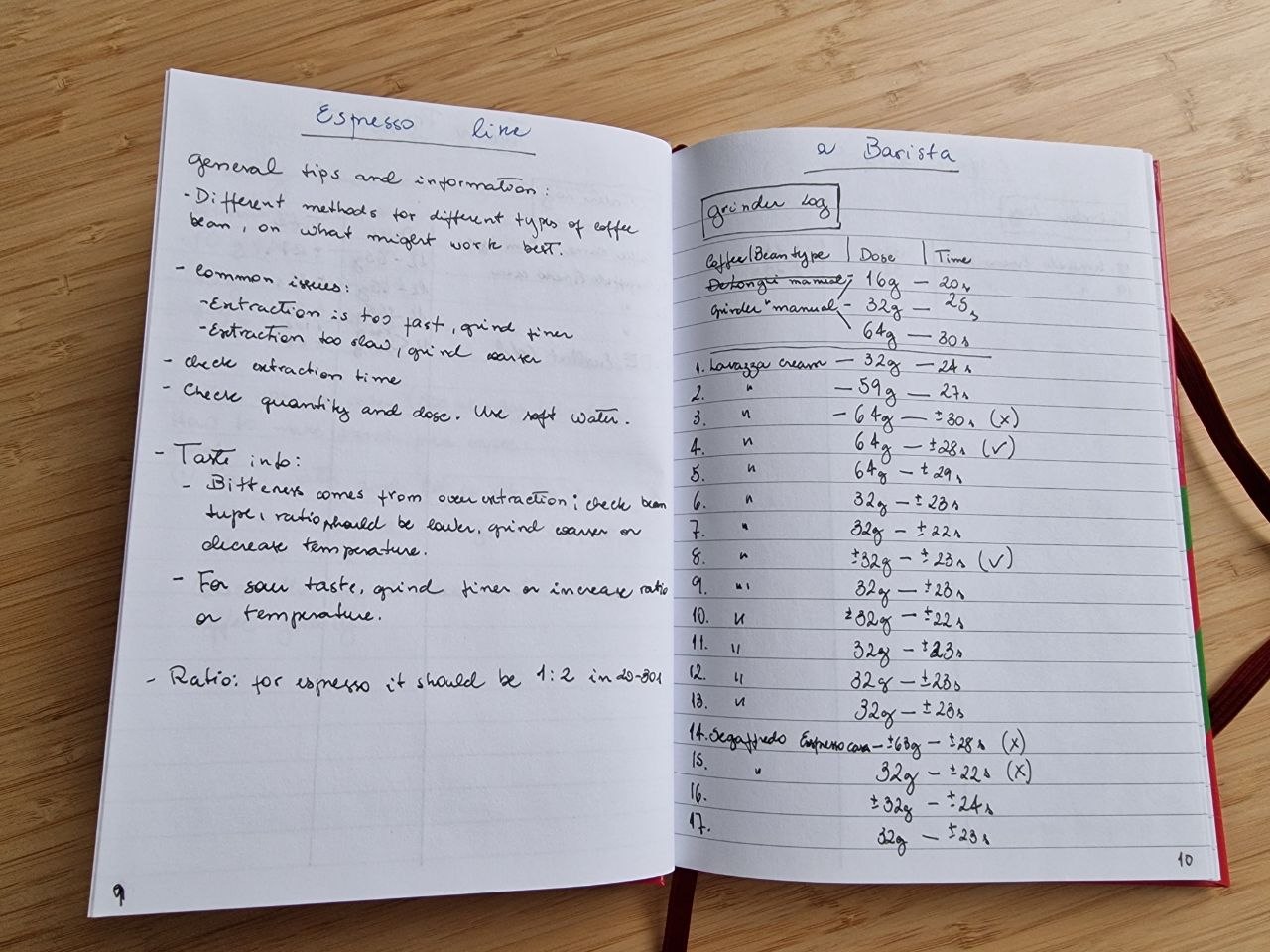
The original notebook, with the system I built before I knew what I was building toward. · Taissa Conde
Making consistent espresso at home is hard because there are at least eight variables interacting at once: grind size, dose, ratio, extraction time, water temperature, water quality, tamp pressure, and bean freshness. The single biggest predictor of consistency for most home setups is grind. So, I tracked everything per pull (a paper notebook works fine to start), watch which variables actually move your taste score across many brews, and don't trust intuition. Expect to plateau after a few months. That plateau is information about your equipment, not a personal failing.
For a while, my DeLonghi sat on the counter and made fine coffee. Not bad coffee, the kind you drink in the morning without thinking about, because the thinking is reserved for the rest of the day.
Eventually I decided to put effort into making a good espresso. That decision turned into a small project, then a notebook, then a problem the notebook couldn't solve, and eventually into the app I now help build. This is the article I wish someone had handed me when I started.
Why is espresso at home so hard for beginners?
Espresso has more interacting variables than almost any other brew method. The heritage SCAA definition of espresso, quoted in 25 Magazine, describes a 25ml (0.8 fl oz)-35ml (1.2 fl oz) beverage prepared from 7g (0.25oz)-9g (0.32oz) of coffee (14g (0.49oz)-18g (0.63oz) for a double) using water at 90.5°C (195°F)-96.1°C (205°F), pushed through the puck at 9-10 atmospheres of pressure, with a brew time of 20-30 seconds (I'm still trying to grasp what nine atmospheres of pressure feels like, and I had no way to know which of those six numbers was breaking my shot when something went wrong).
That definition contains at least six variables you have to get right at the same time. Change one and the others shift around it. Get one wrong and the whole cup is wrong.
When you're starting out, you don't know which variable is causing the problem. A sour shot could be under-extraction (too coarse, too short, too cool) or stale beans or a bad ratio. A bitter shot could be over-extraction (too fine, too long, too hot) or low-quality beans or an old grinder. The internet will tell you all of these things are true. They are. That's the problem.
This is why most beginner espresso advice feels useless. "Adjust your grind" is correct and almost meaningless. Adjust it which way, how much, and what happens to the other variables when you do? James Hoffmann's A Beginner's Guide To Fixing Bad Espresso makes the same point: most troubles trace back to a small set of variables, but you have to see which one is misbehaving before any advice helps.
Our guide on why coffee tastes bitter, sour, or weak will help you name the failure mode. How to make espresso at home has the four-numbers primer, and our espresso recipe has the step-by-step.
The way out, for me, was logging. Not because I had a system. Because I was overwhelmed, and a paper notebook is a thing I do when I don't know what else to do.
What espresso variables should beginners track?
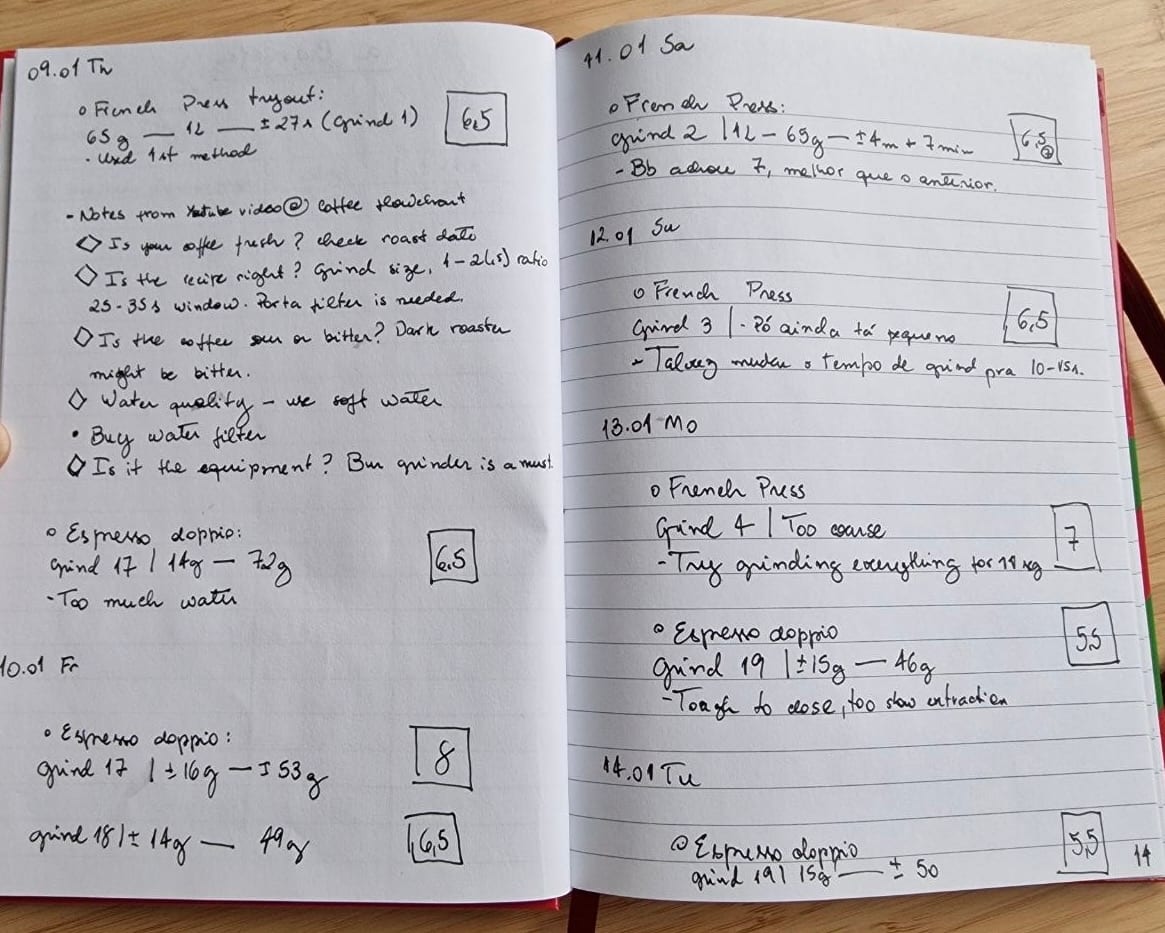
Every brew got a page. Here's what I logged from day one:
- The bean (Lavazza Crema, Segafredo Espresso Casa, whatever was in the cupboard)
- The grind setting (more on this in a minute)
- The dose in grams of coffee in the portafilter
- The grinding time in seconds (you'd ideally track grind size, but I was working with a blade grinder, so time was the closest thing to a setting I had)
- The yield in grams of espresso in the cup
- The extraction time, first drop to last
- Taste scores on bitterness, acidity, and sourness, each on a rough 0-10 scale
- A single line of notes about what went wrong or right
I photographed every cup too, but it was not that helpful overall except for checking the crema. Some pulls came out thin and watery. Some came out so dark they looked burnt. Looking back at those, I see they were a fun way to keep track of items, but I have no idea which ones are the good ones.
I was quite critical with my scores, and I had mostly 5.5, 6.5. The occasional 7 when something seemed to work. One 8 I couldn't reproduce for nothing.
What I didn't realize until later: I should also have tracked time since the bag was opened, because bean freshness drops fast post-roast. That alone explained pulls I'd written off as noise.
The lesson is unglamorous: log more than you think you need to, the same way every time. Sloppy data is worse than no data. Pick a scale, pick a unit, pick the variables, and don't change them mid-experiment. Trust me on this!
Why couldn't I reproduce a good shot?
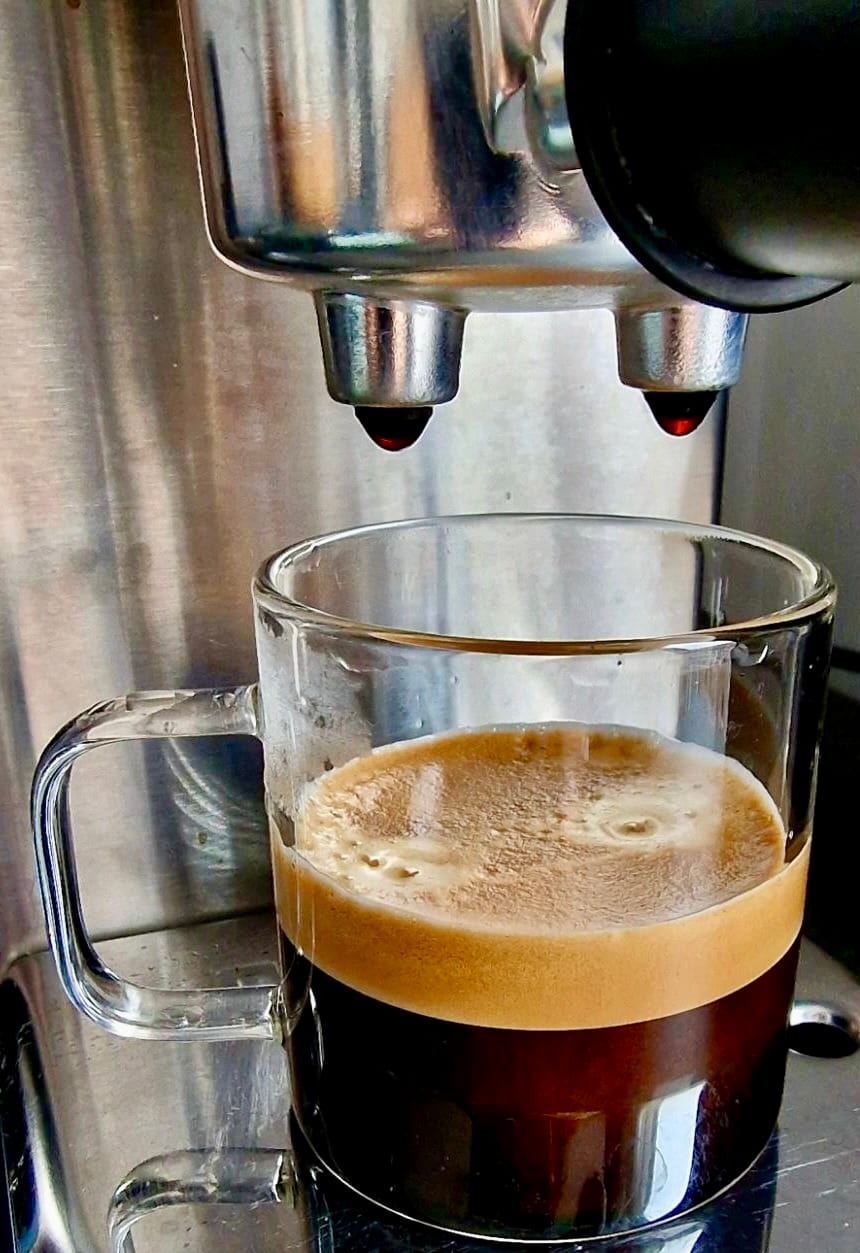
I changed the bean, the dose, the extraction time, but the variable I kept coming back to was the grind.
Here is the part of the story I should be more specific about. The grinder I had was a blade grinder, the kind a lot of beginners start with. Mine happened to be a Bosch TSM6A013B, but the brand isn't really the point. Blade grinders have no adjustable grind size at all. They use a chopping blade rather than burrs, and you control fineness by how long you run the motor. Twenty seconds gives you one result. Thirty seconds gives you a finer one. It's the easiest entry point and the hardest for making a good cup of coffee, if making one is possible at all.
If you've watched James Hoffmann's A Beginner's Guide to Coffee Grinders, you already know what's coming. Blade grinders chop beans into wildly different particle sizes in the same batch: some fines, some boulders, almost nothing uniform. They're fine for filter coffee in a pinch. They are not built for espresso, where particle uniformity is the difference between a balanced shot and one that's simultaneously over-extracted (the fines) and under-extracted (the boulders).
I didn't know this at the time. I owned the grinder, I owned the machine, and I was trying to make espresso. So I did the only thing the blade grinder lets you do: I timed it down to the second: 25 seconds, 23, 27. Same dose every time, same beans, same target. The numbers on the page were precise. The cups weren't.
Sometimes I'd pull a 7. Once or twice an 8. Then the next morning, same bean, same dose, same grind setting, same 25 seconds on the timer, and I couldn't get back there. The score would drop to 6, with notes about extraction running too fast or too slow, and I'd start over.
This wasn't entirely user error. James Hoffmann, on The Diary of a CEO podcast, explained the difference between grinder types: "Good coffee grinders have spinning discs inside that cut to a specific size." Burr grinders produce particles that are roughly the same size as each other. Blade grinders don't. And when the particle distribution inside the puck is uneven, identical dose and timing won't save you. The water finds the path of least resistance, the fines over-extract, the boulders under-extract, and the cup tastes like both at once. On a blade grinder, that distribution isn't something you can adjust. It's whatever the chopping pattern happens to produce that pull.
So that explained the irreproducibility. The notebook had been catching it the whole time. I just hadn't realized what it was showing me.
Why does logging eventually hit a plateau?
I tracked everything else too. Some variables moved the score in small ways. None moved it the way the grind did, and none could fix what the grind was doing.
Then I started researching online, when I came across the 2017 Barista Guild of America Espresso Survey, which described wide bands across pros: an average extraction temperature of 200.3°F, an average ratio of 1:2 with a range of 1:1.5 to 1:2.5, and 51% extracting in 25-30 seconds. That's when I understood how critical variation within my own pulls was.
After a few months of changes, 60-plus pulls logged, different doses, timings, beans, ratios, I stopped seeing the score climb. Some pulls were better than others, but the average wasn't moving. Whatever I was going to extract from the equipment I had, I'd already extracted.
That was useful information, not a defeat. It told me where the limit was.
For most home espresso beginners, the plateau hits before the machine becomes the limit. The grinder is usually the bottleneck first. Hoffmann's A Beginner's Guide to Coffee playlist makes the same point: a workflow built around a poor grinder is hard to rescue with technique. Skipping to a fancier machine before fixing the grinder is the most common expensive mistake in home espresso, and it's one I almost made.
What does your data tell you that intuition can't?
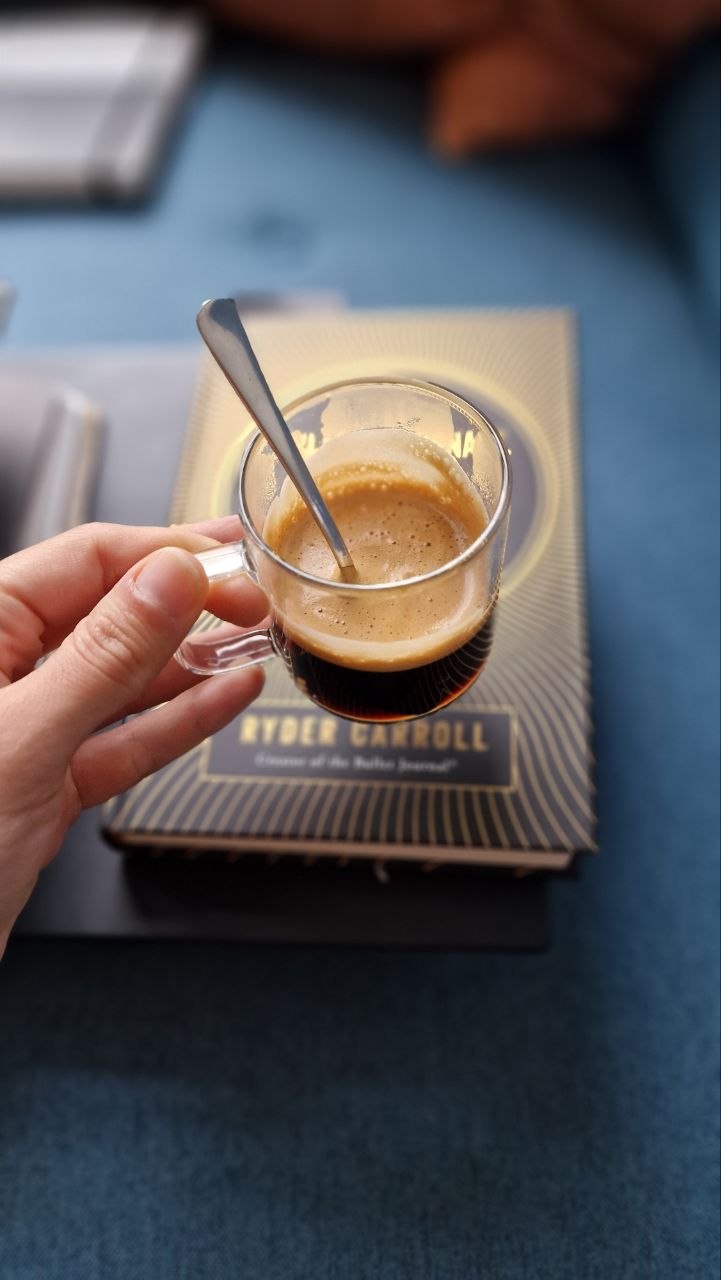
The notebook had hit its own limit by then.
The data was all there. Sixty-something pages of pulls, doses, times, scores, notes. But when I wanted to know "what's my best ratio for Lavazza Crema," I had to flip through every page where that bean appeared, pick out the ratio column, pair it with the score column, and try to hold the trend in my head. When I wanted to ask "which grind setting consistently scored over 7 last month," same exercise. Several pages of flipping. Several minutes of squinting. Still not sure I'd caught everything.
I had great data. I just couldn't read it.
This is the gap between recording and learning. Logging doesn't generate insight by itself. You need to ask your data questions. Which variable, when changed, moved the average score? Which combination produced my best pulls? Where does my consistency actually break down?
That's where Vanessa came in. We'd been working together on other things, and one evening I was complaining about the notebook problem: the data was there, the patterns weren't. She had a clearer sense than I did of what an app could do with it. We started sketching what the journal would look like if it lived somewhere you could query it instead of flip through it. That became iCoffee.
It logs what you did, what it tasted like, and connects the two over time, so the patterns become visible without you having to hold sixty pages of data in your head.
The notebook still exists. It's in a drawer, I keep it because the early pages are funny to look at. The pulls in those photos look nothing like what I make now.
Quick reference: what to log for every espresso pull
If you're starting from zero, log these variables on every pull. Pen and paper works, a spreadsheet works, an app works. The format matters less than the discipline of doing it the same way every time.
| Variable | Why it matters | Unit / format |
|---|---|---|
| Bean and roast date | Freshness shifts extraction. Stale beans behave differently. | Bag name + days post-roast |
| Grinder model and setting | Hardware identity matters as much as the setting. A "fine" setting on one grinder is not "fine" on another. | Model name + dial/step or grind seconds |
| Dose | Determines how much coffee is in the puck before water hits it. | Grams (e.g. 18g (0.63oz)) |
| Yield | Pairs with dose to give you ratio. | Grams in the cup |
| Ratio | Yield divided by dose. Typical espresso lands around 1:2. | e.g. 1:2 or 1:2.3 |
| Extraction time | Pulls outside 20-30 seconds usually signal a grind problem. | Seconds, first drop to last |
| Score | Numeric score on bitterness, acidity, sourness, body. | 0-10 each, same scale every pull |
| One-line note | What surprised you. What you'd change next. | One sentence, freeform |
After 20 to 30 logged pulls, patterns start to show. Not always the patterns you expect. The point of the log isn't to remember each pull. It's to make the variables visible across pulls, so you stop guessing and start adjusting.
A paper notebook still works. iCoffee is what I use now to find the pattern across pulls, which is the part paper couldn't help with.
Where to go from here
The first month of espresso at home is going to be bad. Track it anyway. The bad cups are the data that makes the good cups possible. By month two, you'll know which variable in your setup is the bottleneck. By month three, you'll know whether you've already extracted everything your equipment can give you. Or if you're a coffee addict like me, 60+ pulls in the first month will tell you the same. That tells you what to upgrade and what to leave alone.
The setup I started with is still mostly the setup I have. The thinking went into the early months, not the morning. The notebook itself eventually became an app, but the lesson hasn't changed from those handwritten pages: not perfect cups every time, but repeatable good ones, because the variables behind them are visible and known. That's what dialing in espresso actually means at home.
About the author
Taissa Conde
Co-founder of iCoffee
Make your next cup count.
iCoffee is the app that helps you brew better coffee at home, every day.
Get the appdownloadKeep reading
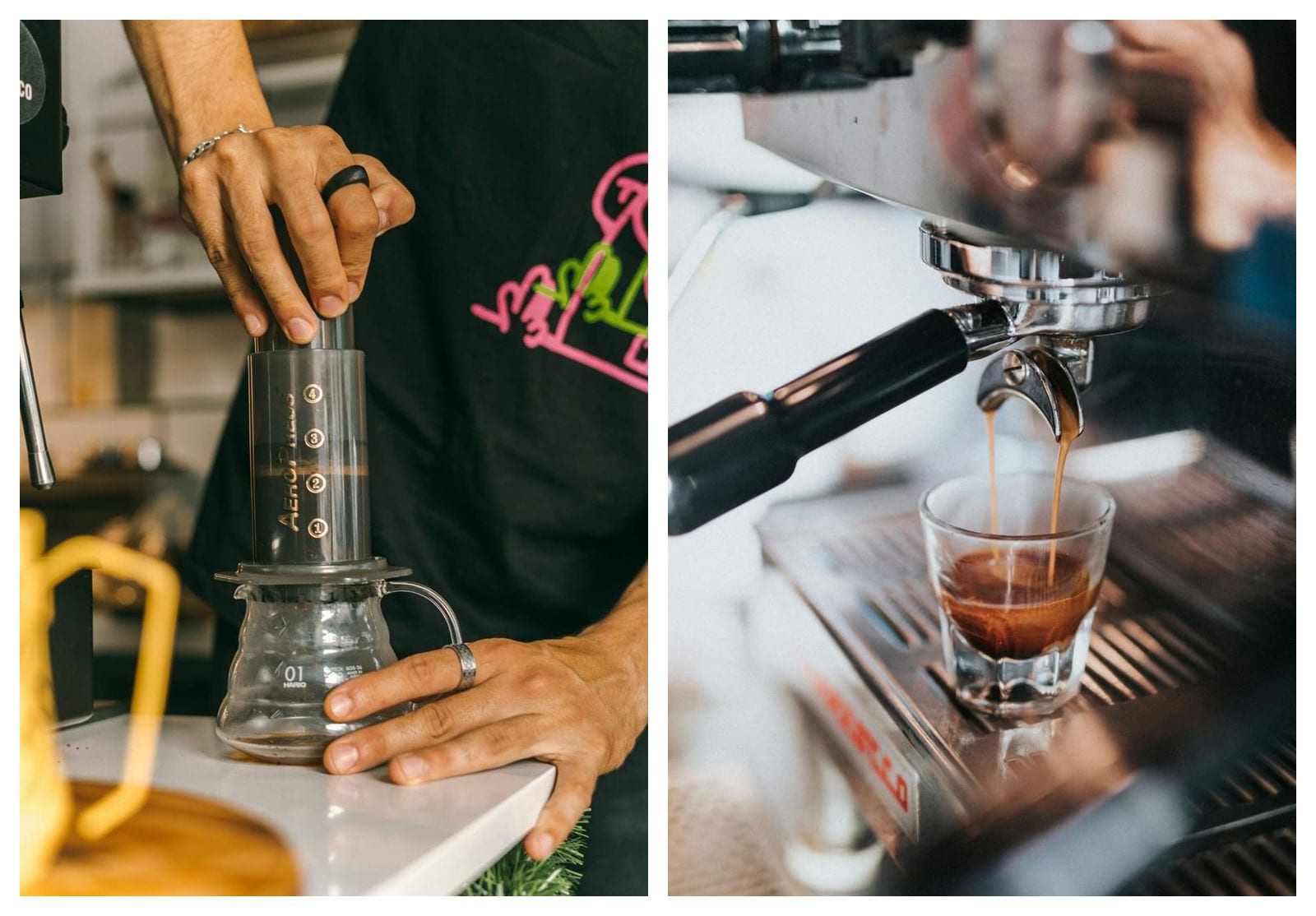
AeroPress vs Espresso Machine: Which One Is Right for You?
The AeroPress costs $40. An espresso machine costs $200 to $2,000. Here is what you get for the difference, and which one makes sense for your kitchen.
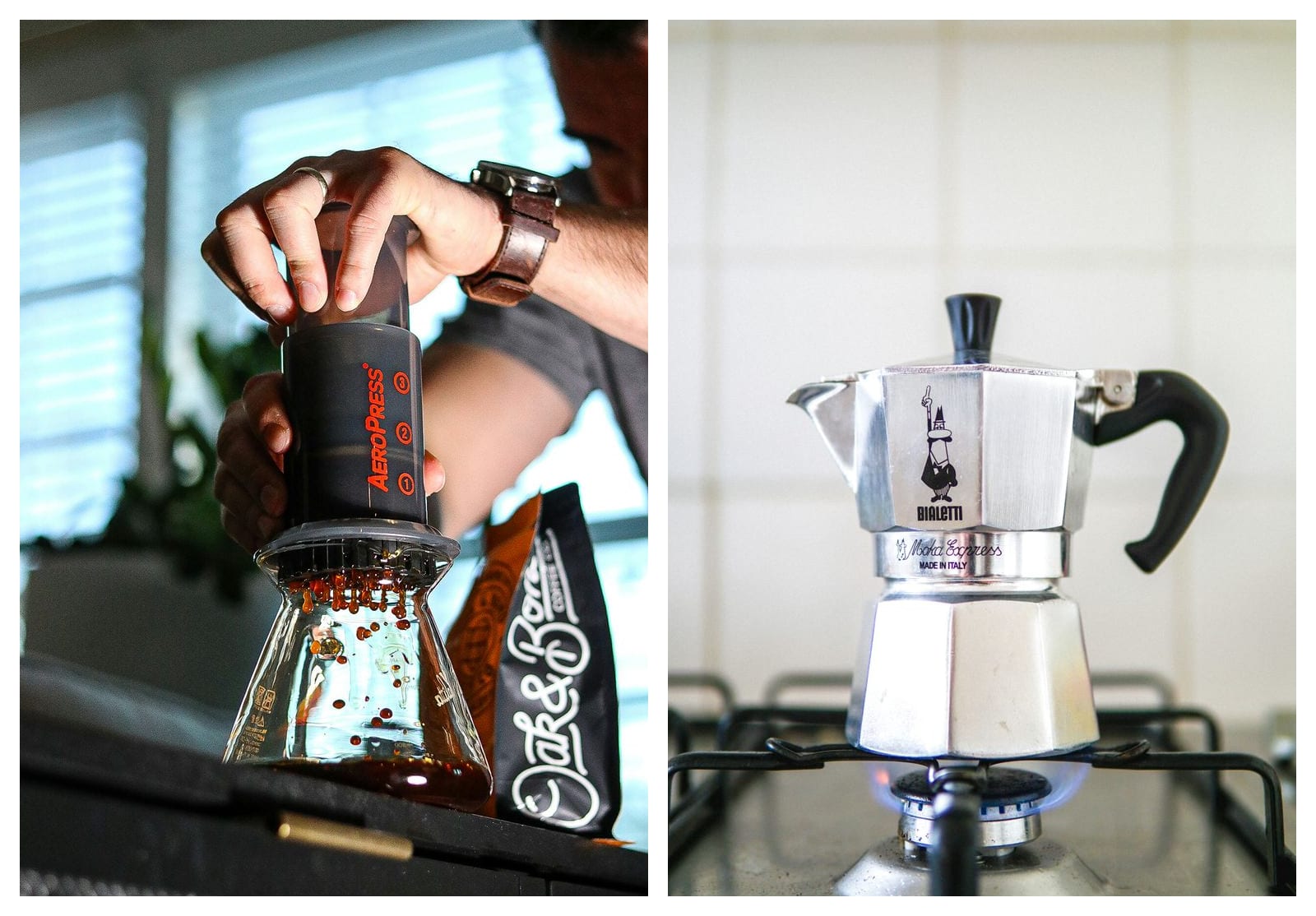
AeroPress vs Moka Pot: Which One Should You Buy?
Two compact brewers, two very different cups. What separates the AeroPress and the Moka Pot on flavor, effort, cost, and who each one is actually built for.

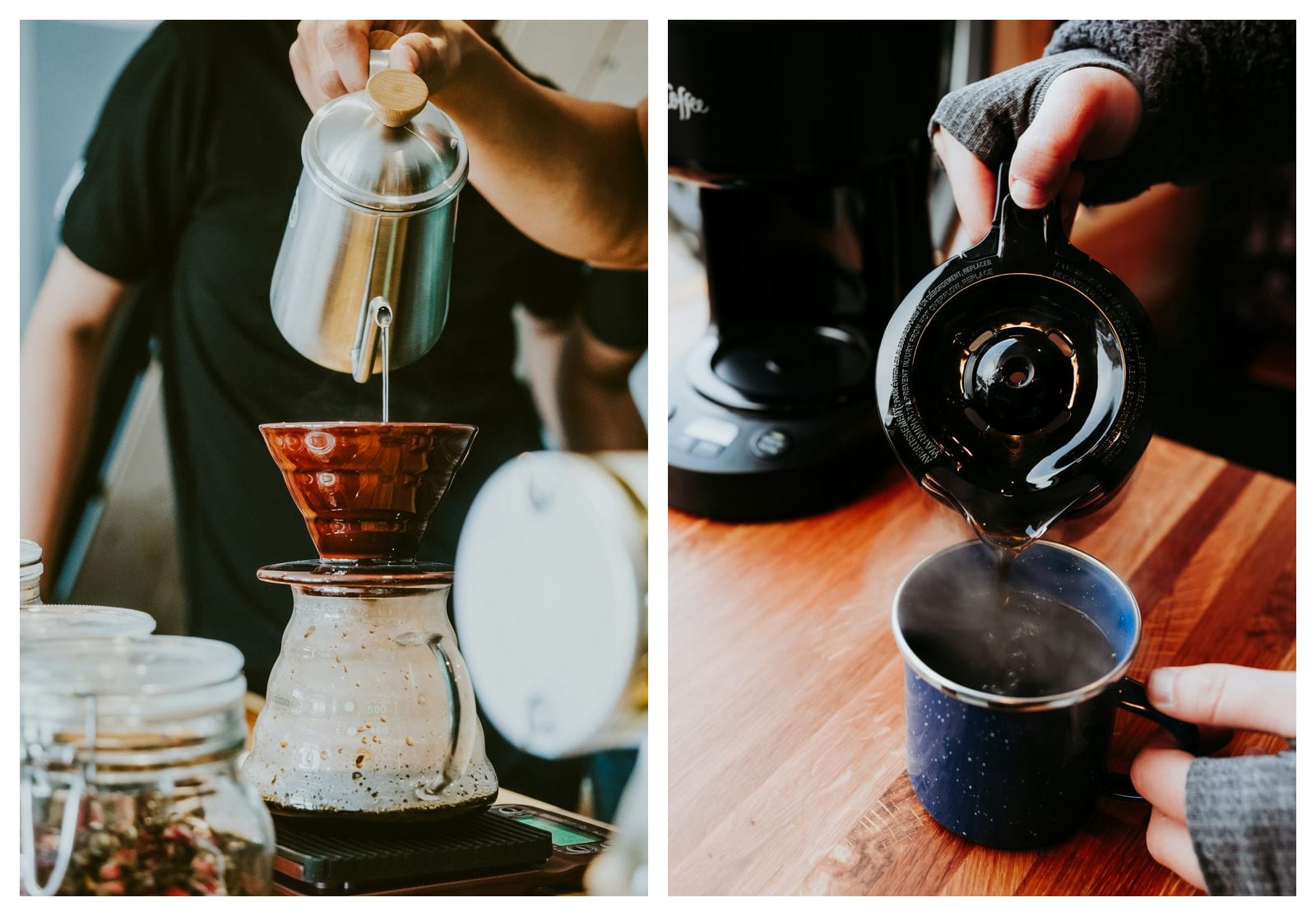
Pour Over vs Drip Coffee: Is the Upgrade Worth It?
A pour over gives you the temperature, the pour and the grind to adjust. A drip machine gives you a button. Which one suits you, on flavor, effort and cost.
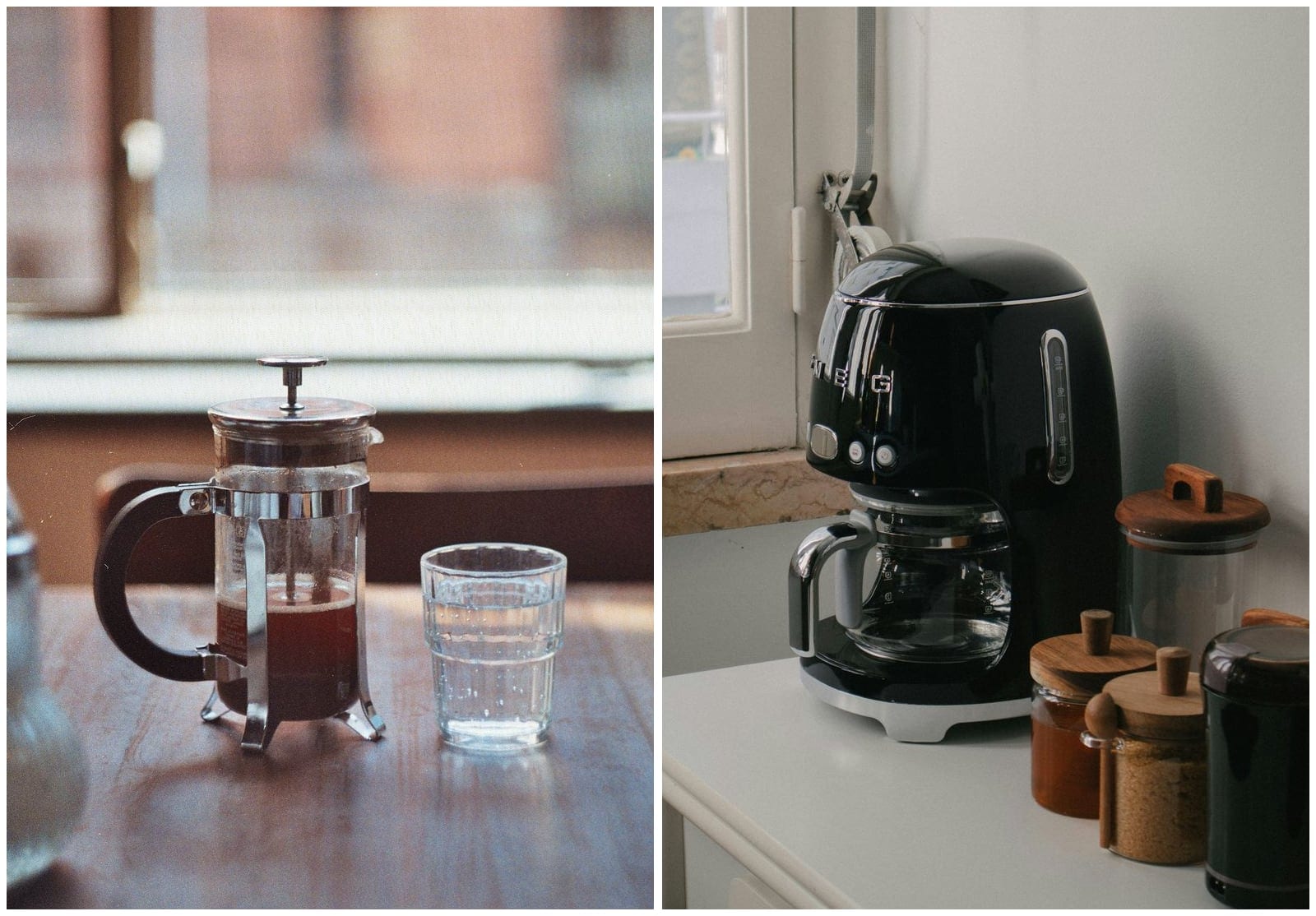
French Press vs Drip Coffee: Which One Should You Use?
Drip machine or French press: the cup, the effort, the cost and the honest trade-offs compared, plus a clear recommendation for each kind of home brewer.