

Japanese Iced Coffee Recipe: The iCoffee House Brew
Bright and aromatic, hot-brewed straight onto ice for instant chill. 30g coffee, 300ml water at 96°C, 1:16 ratio, medium-fine grind. Ready in 5 minutes.
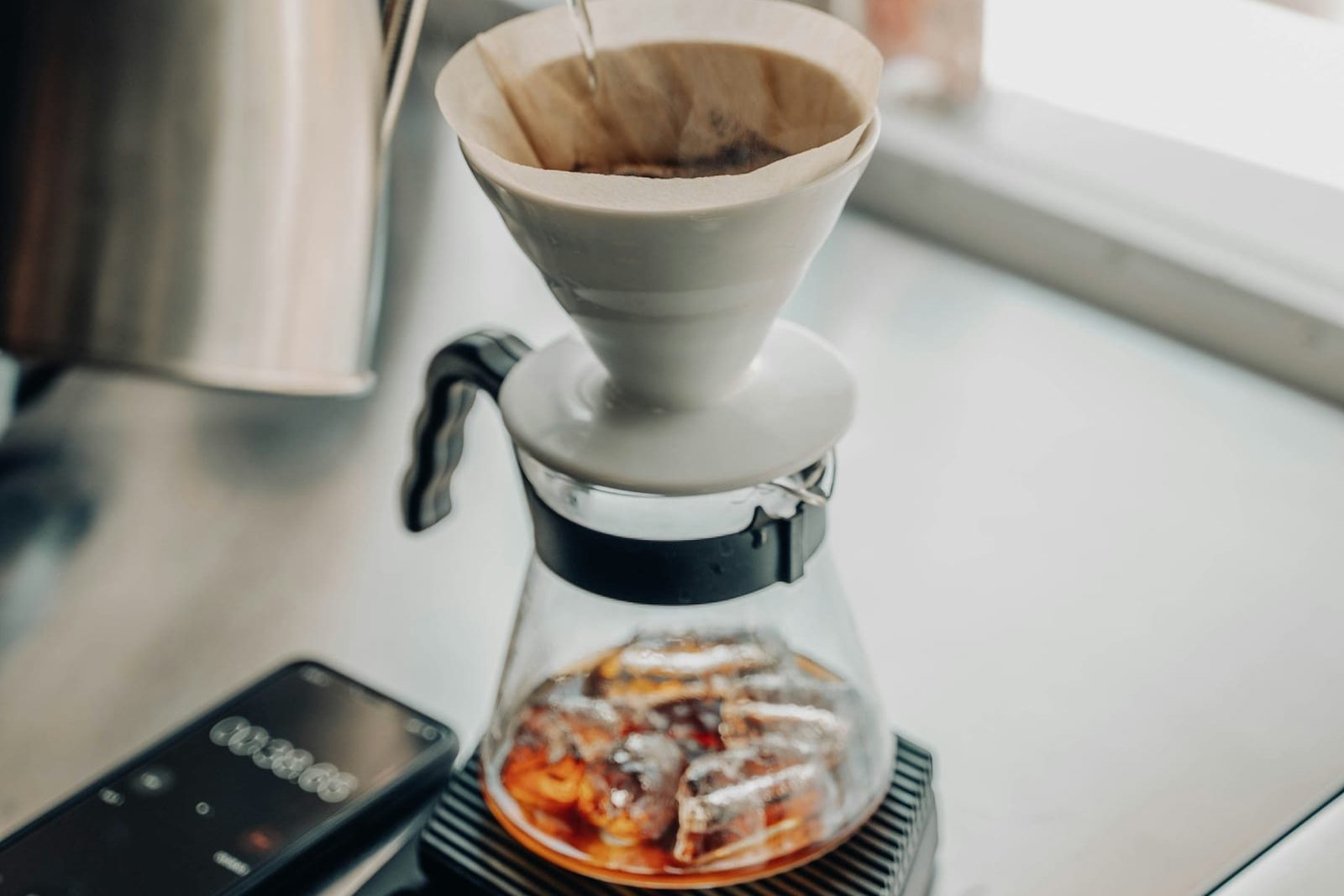
The Japanese flash-chill in action, hot brew hitting ice to lock in volatile aromas. · Photo by Yitzhak Rodriguez on Unsplash
Japanese iced coffee brews hot directly onto ice, which traps aromatic compounds that evaporate during cold brew's slow steep. We use 30g (1.06oz) of medium-fine coffee with 300ml (10.1 fl oz) of water at 96°C (205°F) poured onto 200g (7.05oz) of ice in the server. Final volume lands around 480ml (16.2 fl oz), ratio works out to 1:16 on the finished cup. Bright, aromatic, ready in five minutes.
- Ratio
- 1:16
- Coffee
- 30g (1.06oz)
- Water
- 300ml (10.1 fl oz)
- Temperature
- 96°C (205°F)
- Grind
- Medium-Fine
- Total time
- 5 min
- Yield
- 240ml (8.1 fl oz)
- Difficulty
- Medium
What is Japanese iced coffee?
Japanese iced coffee, or flash brew, is a hot pour over that lands directly on ice. It goes from hot to cold in about a second. Roughly 60% of what ends up in the glass arrives as hot water through the grounds. The other 40% is already waiting there as ice.
Coffee left to cool slowly loses its most volatile aromatics on the way down. Those are exactly the floral and citrus notes a light roast is roasted to show. Chilling it in one step keeps them in the glass. The cup tastes like the bean. A hot brew left to go lukewarm tastes generic by comparison.
Japanese iced coffee vs cold brew
Japanese iced coffee is hot-brewed and drinkable in about five minutes; cold brew steeps cold for 16 to 24 hours. The flash-chilled cup is brighter, more aromatic, and more acidic; the cold-steeped one is smoother, heavier, and lower in acidity.
The difference is heat. Hot water pulls the acids and aromatics that make a light roast taste like citrus or florals, and the ice locks them in. Cold water never dissolves most of them, so cold brew trades that lift for a rounder, sweeter concentrate you dilute later. Pick flash brew when you want the bean to show, cold brew when you want smooth and you have a day.
What you need
Equipment
- V60 or Kalita Wave dripper (any pour over works)
- Glass server or carafe
- Gooseneck kettle
- Kitchen scale
- Large ice cubes (small cubes melt too fast)
Ingredients
- 30g (1.06oz) freshly ground coffee (medium-fine grind, slightly finer than standard pour-over)
- 300ml (10.1 fl oz) filtered water (brought to 96°C)
- 200g (7.05oz) ice (large cubes, in the server before brewing)
How to make Japanese iced coffee
Fill the glass server with 200g (7.05oz) of large ice cubes.
Place dripper on top of the server, rinse the filter, add 30g (1.06oz) of coffee, level the bed.
Bloom: pour 60ml (2 fl oz) of water at 96°C (205°F) and wait 30 seconds.
Continue pouring in slow spirals until you reach 300ml (10.1 fl oz) total water through the bed.
Why this recipe works
Japanese iced is a pour over with half the water replaced by ice. The hot brew extracts at full temperature like a regular V60, then chills instantly when it hits the ice, locking volatile aromatics into the cup before they can evaporate. That's the entire reason a flash-brewed iced tastes brighter than cold brew.
Ratio. 1:16 on the finished cup. The recipe is 30g (1.06oz) coffee, 300ml (10.1 fl oz) brew water, 200g (7.05oz) ice. The ice melt brings total liquid to around 480ml (16.2 fl oz), which works out to 1:16 in the glass.
Temperature. 96°C (205°F), full hot-brew temperature. The instant chill at the server is what defines this method; cooler brew water just makes a weaker cup.
Grind. Medium-fine, a click finer than standard V60. The reduced brew water (300ml (10.1 fl oz) instead of 480ml (16.2 fl oz)) cuts contact time, so a finer grind compensates and keeps the extraction yield where you want it.
Ice. Large cubes melt slower and chill faster. Crushed ice or small cubes melt before the brew is finished and over-dilute the cup.
The 60/40 brew-water-to-ice split is the move. Half-water, half-ice in the server keeps the math simple and lands the final ratio at 1:16 without thinking about it.
What to adjust
If your cup tastes weak or watery: too much ice melt. Use larger cubes and bump the dose to 32g (1.13oz).
If your cup tastes too bitter: your grind is too fine or the pour ran too slow. Step one click coarser.
If your cup tastes flat or aromatic-dead: your server wasn't cold enough at the start, so the brew finished before it hit ice. Pre-chill the server before brewing.
Related
More recipes
- V60 Recipe: The iCoffee House Brew
Bright and clean, florals up top and acidity that stays lively. 18g coffee, 288ml water at 96°C, 1:16 ratio, medium-fine grind. Ready in 5 minutes.
- Cold Brew Recipe: The iCoffee House Brew
Smooth, low-acid cold brew concentrate for iced drinks. 200g coffee, 1000ml cold water, 1:5 ratio, coarse grind. 20-hour steep, dilute 1:1 to serve.
- AeroPress Recipe: The iCoffee House Brew
Clean and balanced, body in the middle and clarity at the top. 15g coffee, 225ml water at 85°C, 1:15 ratio, medium-fine grind. Ready in 3 minutes.
Related guides
- Pour over vs French press vs AeroPress
AeroPress vs French press vs pour over: which makes better coffee? Clarity, body, speed, and forgiveness compared, with an honest pick for each brewer.
- Why your coffee tastes bitter, sour, or weak (and how to fix it)
Is your coffee weak, bitter, or sour? Learn to diagnose the cause and fix it at home, without buying new gear.
- Is Your Grinder the Problem? How to Tell Before You Upgrade
Before you spend money on a new grinder or espresso machine, here's how to use your own brew data to confirm which one is actually your bottleneck.