

Cold Brew Recipe: The iCoffee House Brew
Smooth, low-acid cold brew concentrate for iced drinks. 200g coffee, 1000ml cold water, 1:5 ratio, coarse grind. 20-hour steep, dilute 1:1 to serve.
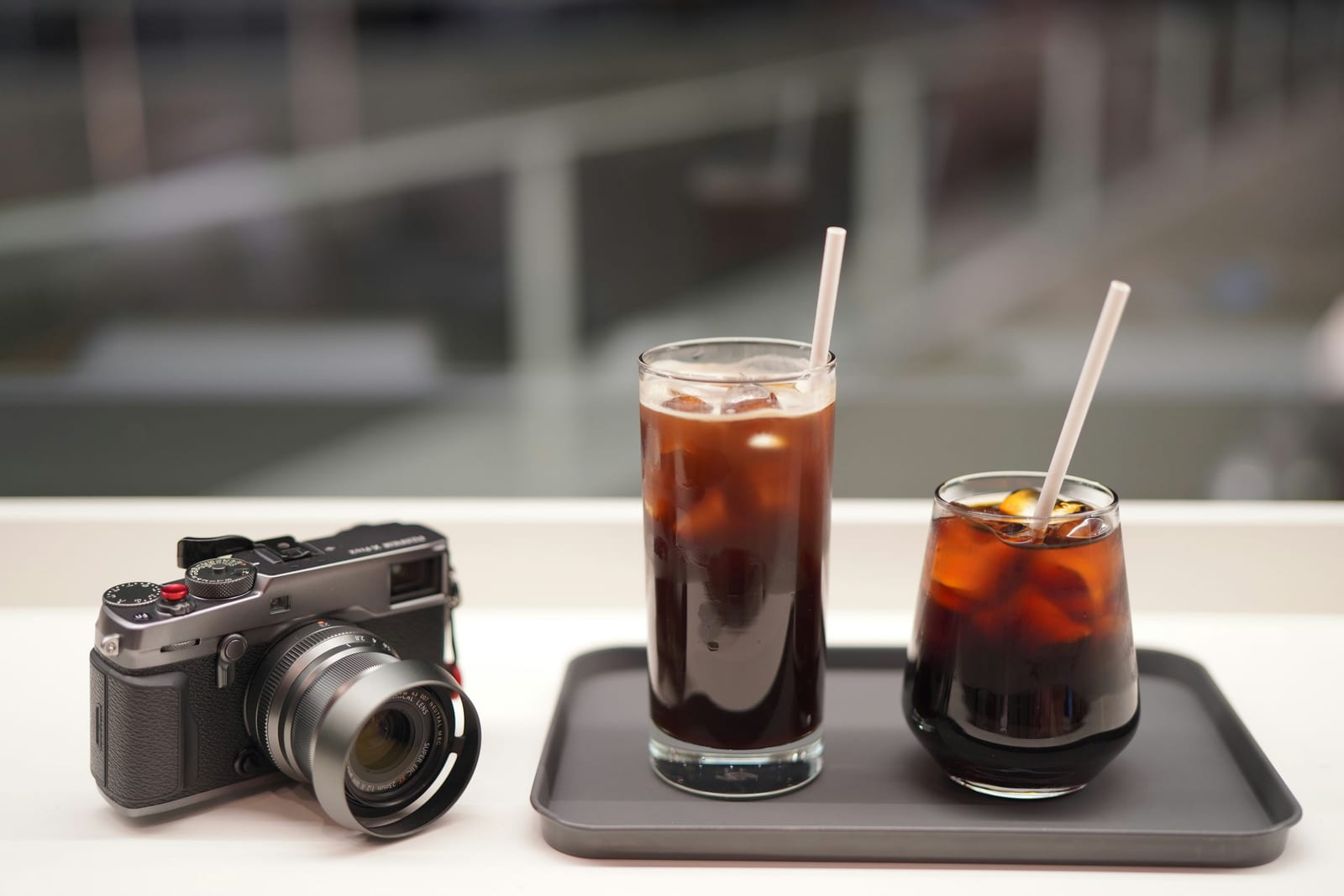
What a week's worth of cold brew looks like, diluted over ice and ready to drink. · Photo by SingSing Wade Kim on Unsplash
Cold brew runs on time instead of heat. We steep 200g (7.05oz) of coarse coffee in 1000ml (33.8 fl oz) of cold filtered water, a 1:5 ratio, for 16–24 hours in the fridge. The result is a concentrate to dilute 1:1 with water or milk, smooth and low-acid by design. Yields about 900ml (30.4 fl oz) of concentrate, enough for a week of iced coffee.
- Ratio
- 1:5
- Coffee
- 200g (7.05oz)
- Water
- 1000ml (33.8 fl oz)
- Temperature
- 20°C (68°F)
- Grind
- Coarse
- Total time
- 20 hr
- Yield
- 900ml (30.4 fl oz)
- Difficulty
- Easy
What is cold brew?
Cold brew is coffee steeped in cold water for 16 to 24 hours. No heat is used at any point. Without heat the water works slowly, dissolving sugars and caffeine readily while leaving most of the acids in the grounds. That's why it tastes round and heavy, and barely sour even when the beans are bright.
It suits people who like their coffee cold and plan a day ahead. This recipe makes a 1:5 concentrate that you cut 1:1 in the glass. One jar covers about a week and keeps in the fridge for two, which is the practical reason to brew it this strong.
What you need
Equipment
- Large jar or pitcher (2 L capacity)
- Fine-mesh strainer + paper filter, or a dedicated cold brew filter
- Kitchen scale
- Refrigerator space
Ingredients
- 200g (7.05oz) freshly ground coffee (coarse grind, like raw sugar)
- 1000ml (33.8 fl oz) cold filtered water (straight from the tap if filtered, no need to boil)
How to make cold brew concentrate
Add 200g (7.05oz) of coarse coffee to the jar.
Pour 1000ml (33.8 fl oz) of cold filtered water over the grounds and stir to combine.
Cover and steep in the fridge for 16–24 hours. Around 20 hours is the sweet spot.
Strain through a fine-mesh sieve first, then through a paper filter. Store the concentrate chilled in a sealed jar for up to two weeks.
Why this recipe works
Cold brew is a slow extraction, not a fast one. Without heat to drive solubility, the brew pulls sugars and caffeine cleanly while leaving most of the acids behind. That's the entire reason cold brew tastes smooth rather than bright.
Ratio. 1:5, a true concentrate. Heavier ratios are a waste of beans; lighter ones produce a "cold brew" you have to drink straight without dilution, which means the fridge is full of mediocre coffee. The 1:5 concentrate dilutes 1:1 at the cup, so the brewed yield serves twice the volume.
Temperature. Cold, around 20°C (68°F) at room or fridge temp. Room-temperature steeps run faster but pull more bitter compounds; fridge steeps run cleaner and let you forget about it overnight.
Grind. Coarse, like raw sugar. Finer grinds over-extract during the long contact time and produce a muddy concentrate that won't filter clean.
Steep duration. 16–24 hours, with 20 the target. Under 16 and the concentrate tastes weak after dilution; past 24 and woody, papery flavors creep in.
Most cold brew recipes either run a weak 1:8 that doesn't survive dilution, or push the steep to 36 hours and call the woody flavor "complexity." A clean 1:5 at 20 hours is the actual sweet spot, and the resulting concentrate keeps in the fridge for two weeks without degrading.
What to adjust
If your concentrate tastes too bitter or woody: your steep ran past 24 hours, or your grind is too fine. Cut the next batch to 18 hours and step the grind one click coarser.
If your concentrate tastes thin straight from the jar: your steep was too short. Push to a full 24 hours, and check the grind isn't so coarse the water can't penetrate the bed.
If your concentrate is muddy or sediment-heavy: your filter step wasn't enough. Strain through a mesh sieve first, then a paper filter. The two-step filter is non-negotiable.
Brewed it? Tell us how it went.
Related
More recipes
- Japanese Iced Coffee Recipe: The iCoffee House Brew
Bright and aromatic, hot-brewed straight onto ice for instant chill. 30g coffee, 300ml water at 96°C, 1:16 ratio, medium-fine grind. Ready in 5 minutes.
- Inverted AeroPress Recipe: The iCoffee House Brew
Inverted AeroPress recipe, zero drip-through: 18g coffee, 200ml at 100°C, 1:11, medium-fine grind, ready in 4 minutes. Full immersion for a bolder cup.
- V60 Recipe: The iCoffee House Brew
Bright and clean, florals up top and acidity that stays lively. 18g coffee, 288ml water at 96°C, 1:16 ratio, medium-fine grind. Ready in 5 minutes.
Related guides
- Why your coffee tastes bitter, sour, or weak (and how to fix it)
Is your coffee weak, bitter, or sour? Learn to diagnose the cause and fix it at home, without buying new gear.
- Is Your Grinder the Problem? How to Tell Before You Upgrade
Before you spend money on a new grinder or espresso machine, here's how to use your own brew data to confirm which one is actually your bottleneck.