

V60 Recipe: The iCoffee House Brew
Bright and clean, florals up top and acidity that stays lively. 18g coffee, 288ml water at 96°C, 1:16 ratio, medium-fine grind. Ready in 5 minutes.
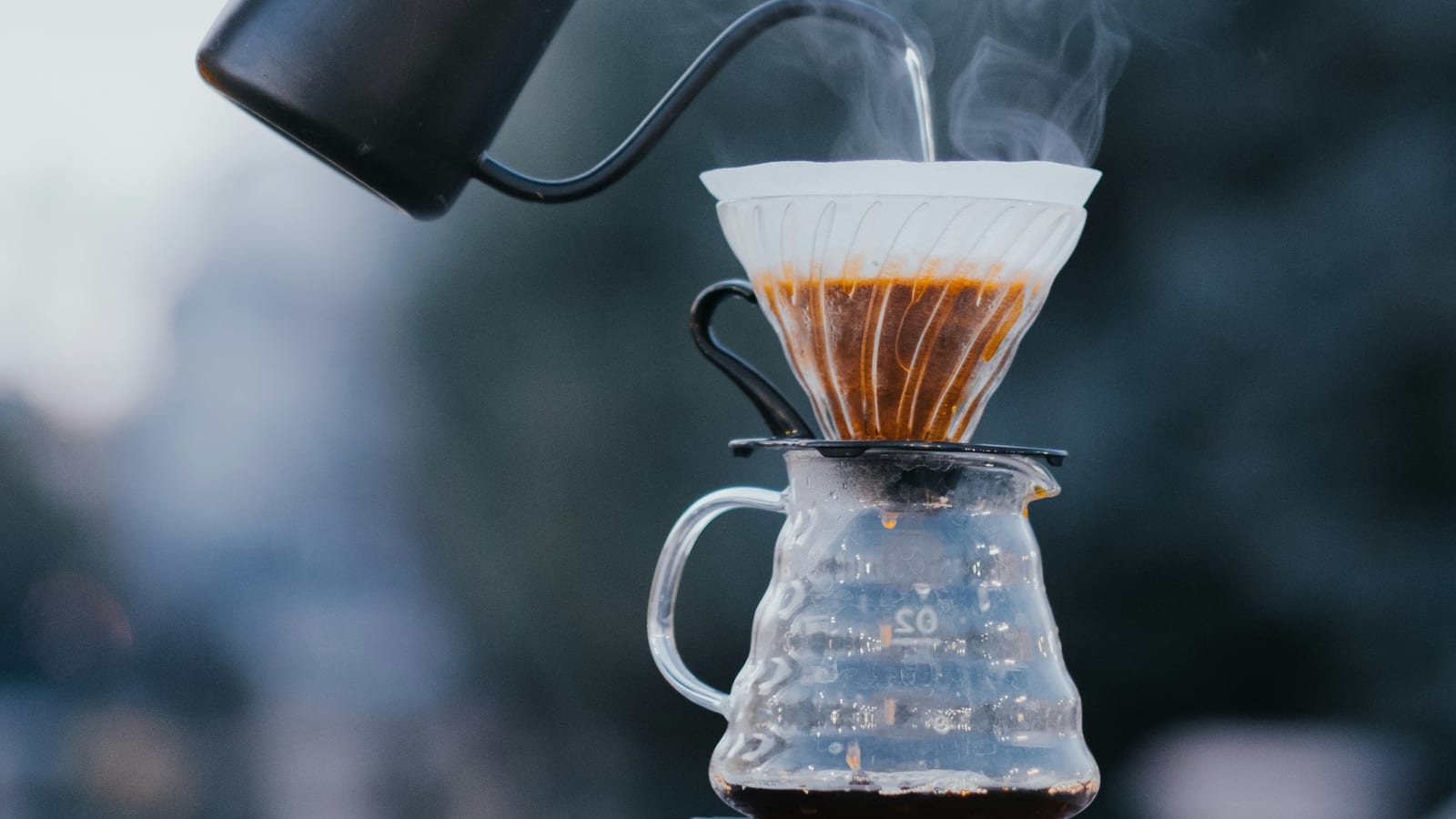
A V60 built for clarity. We brew 18g (0.63oz) of medium-fine coffee with 288ml (9.7 fl oz) of water at 96°C (205°F), a 1:16 ratio, poured in slow concentric spirals. The hot water and clean paper filter pull origin character to the front: florals, bright acidity, and the distinct notes that single-origin beans are roasted to show. About five minutes start to finish, yielding roughly 252ml (8.5 fl oz) in the cup.
- Ratio
- 1:16
- Coffee
- 18g (0.63oz)
- Water
- 288ml (9.7 fl oz)
- Temperature
- 96°C (205°F)
- Grind
- Medium-Fine
- Total time
- 5 min
- Yield
- 252ml (8.5 fl oz)
- Difficulty
- Medium
What is a V60?
A V60 is a cone with ribs up the inside and one large hole at the bottom. Almost nothing about the brew is fixed for you. Water leaves as fast as you pour it and as fast as the grind allows, which puts the rate, the temperature and your aim directly into the cup.
That puts more of a good single origin in front of you than anything else here. It also means a rushed pour turns up sour and hollow. Bloom first, then pour in slow circles from the middle out. Go too fast, or straight down the center, and the water carves a channel past most of the coffee. Choose it when you want brightness and origin character, and don't mind that the technique is part of the recipe.
What you need
Equipment
- V60 dripper (Hario, Origami, or any cone with a large single hole)
- Gooseneck kettle for pour control
- Paper filter (1, V60-shaped)
- Kitchen scale with 0.1g precision
- Coffee server or mug
Ingredients
- 18g (0.63oz) freshly ground coffee (medium-fine grind, ideally 1 to 3 weeks after roasting)
- 288ml (9.7 fl oz) filtered water (brought to 96°C)
How to make coffee in a V60
Place and rinse the paper filter in the V60, then discard the rinse water.
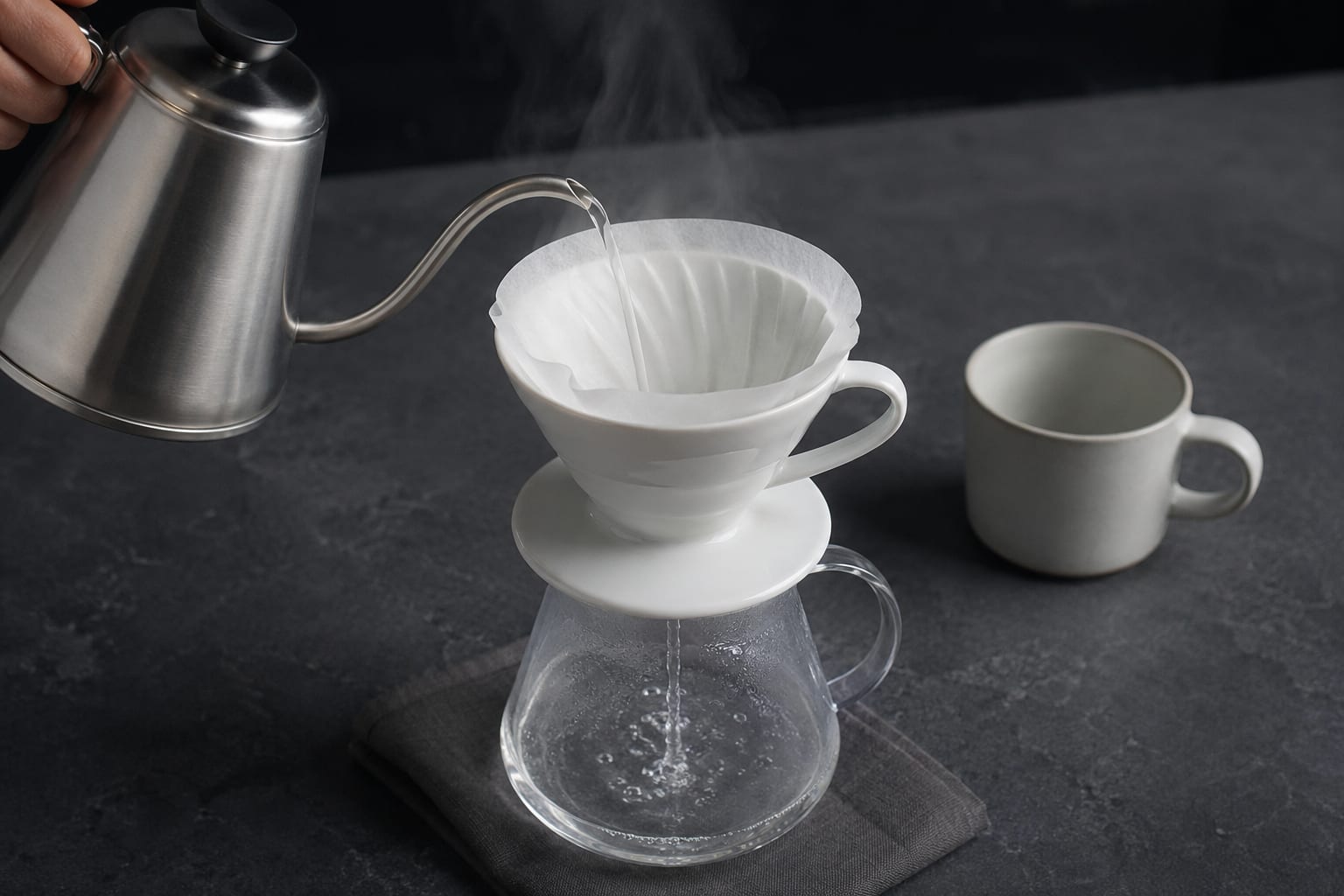
Add 18g (0.63oz) of freshly ground coffee and level the bed.
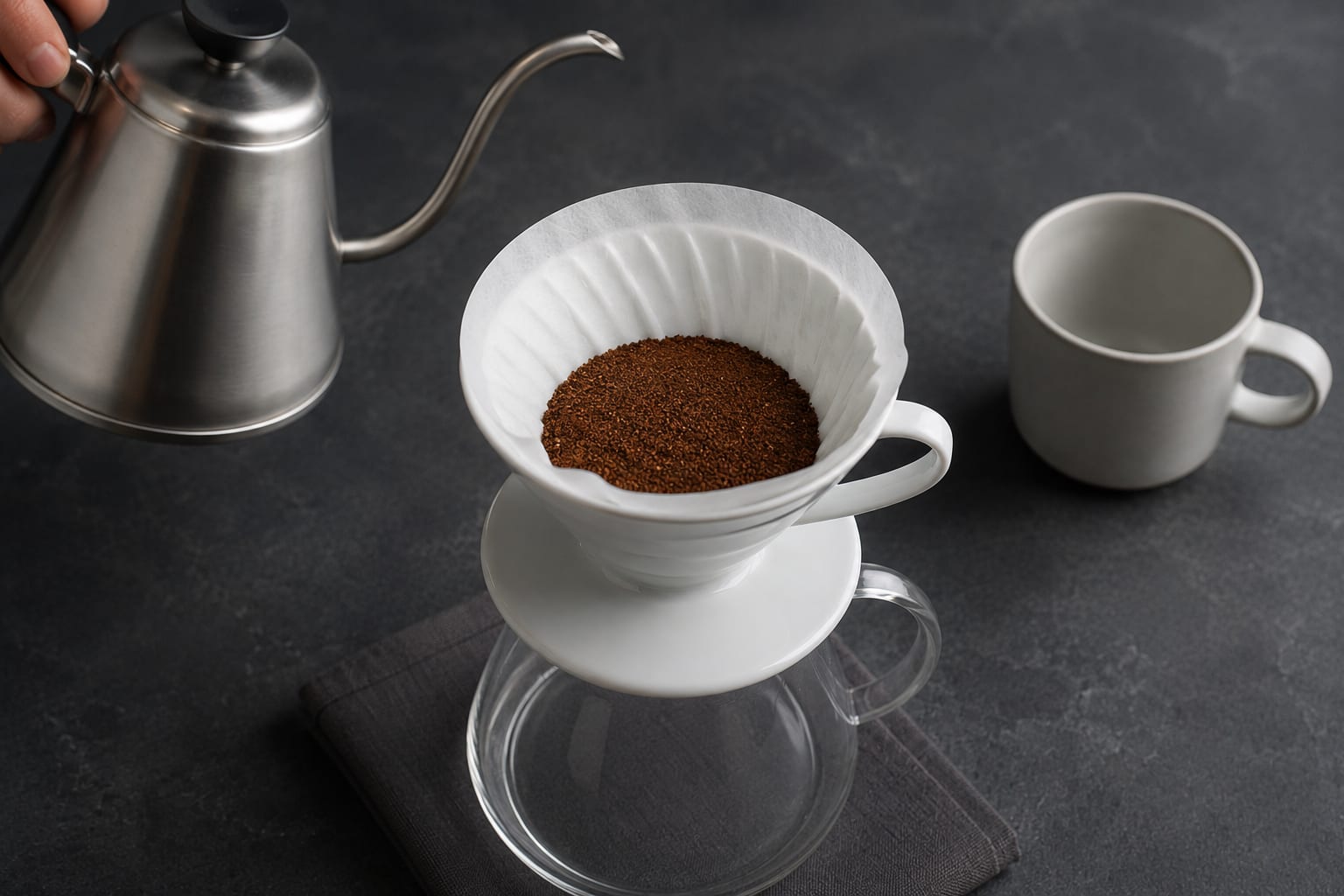
Bloom: pour 40ml (1.4 fl oz) of water at 96°C (205°F) over the grounds and wait.
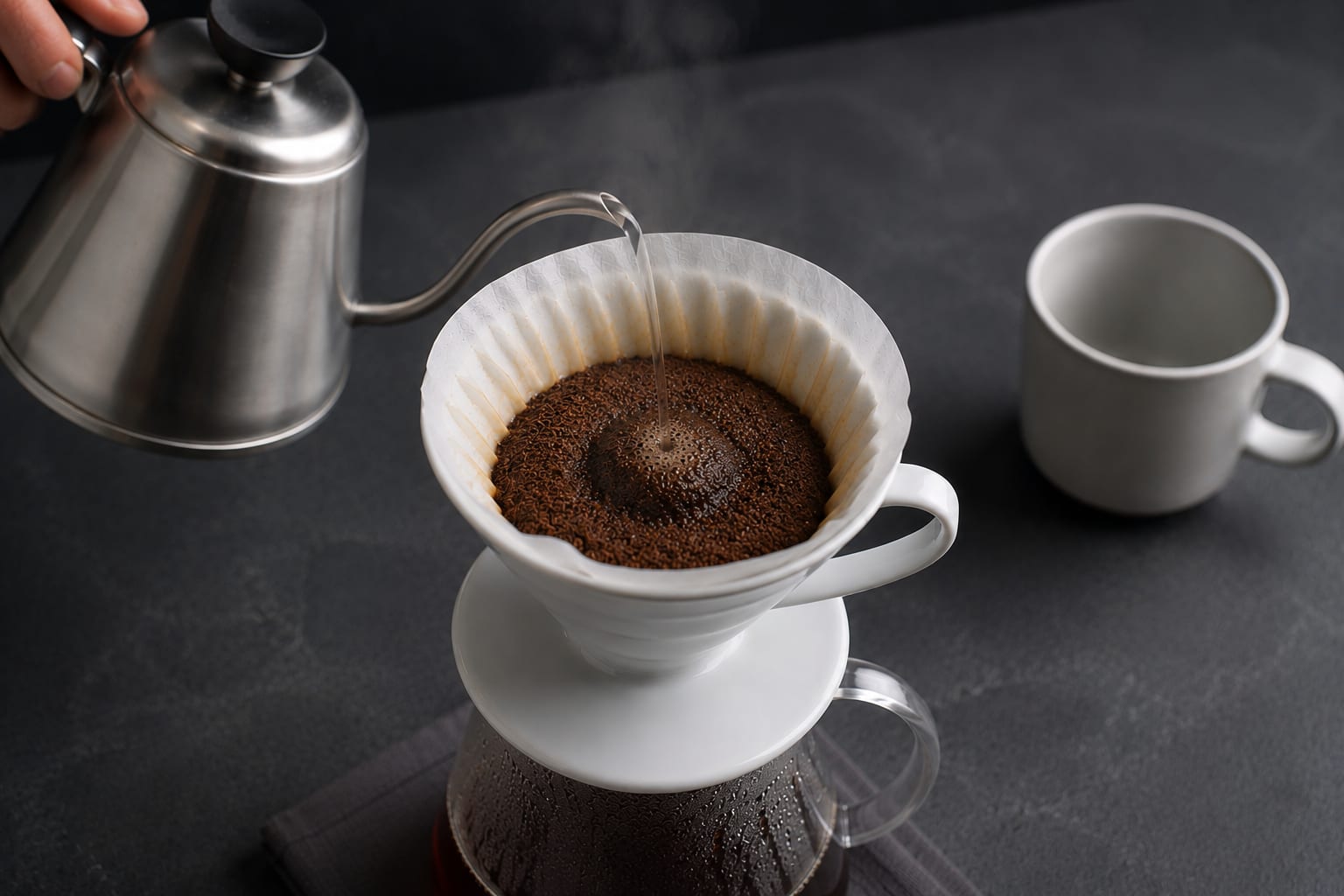
Continue pouring in slow concentric spirals until you reach 288ml (9.7 fl oz) total.
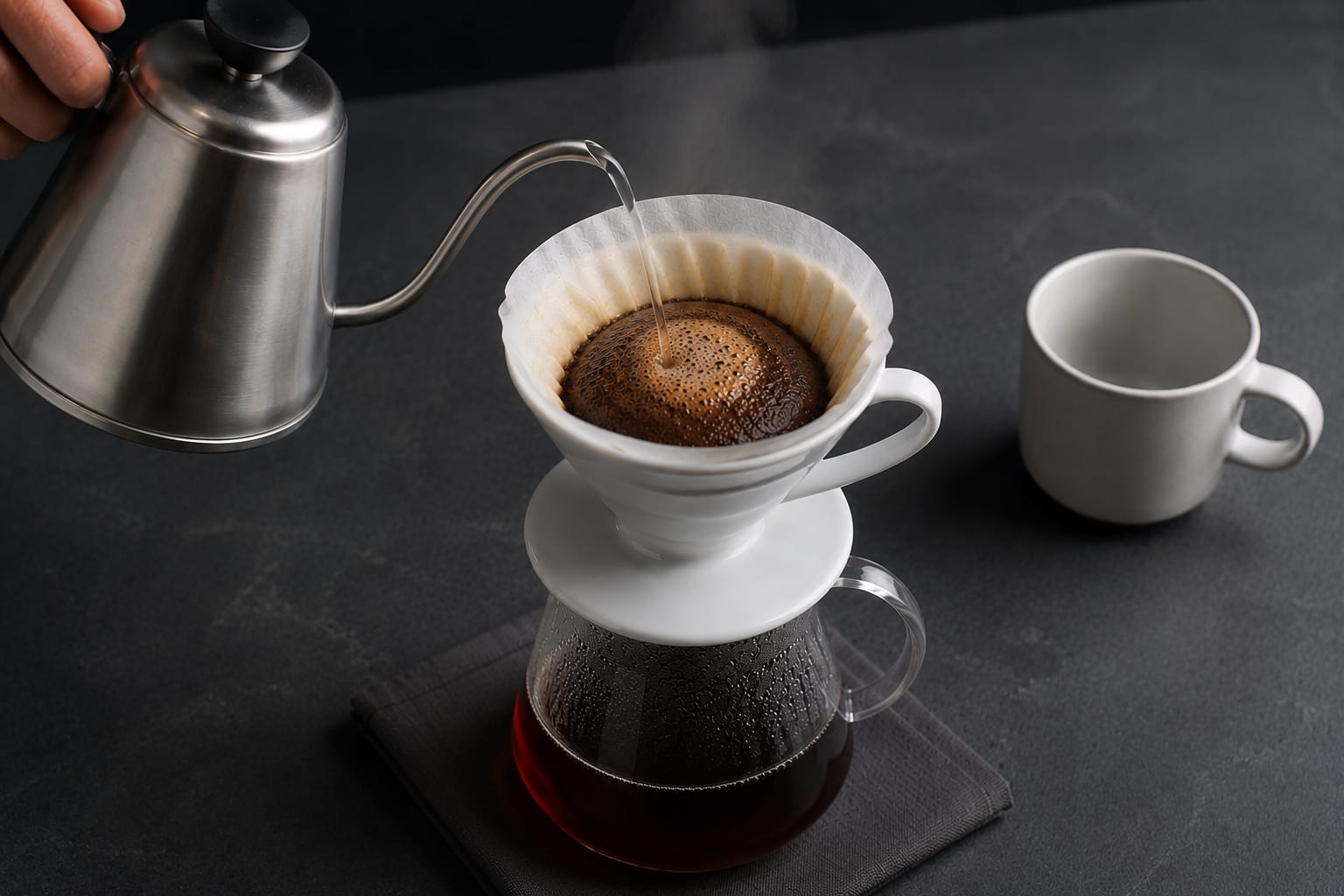
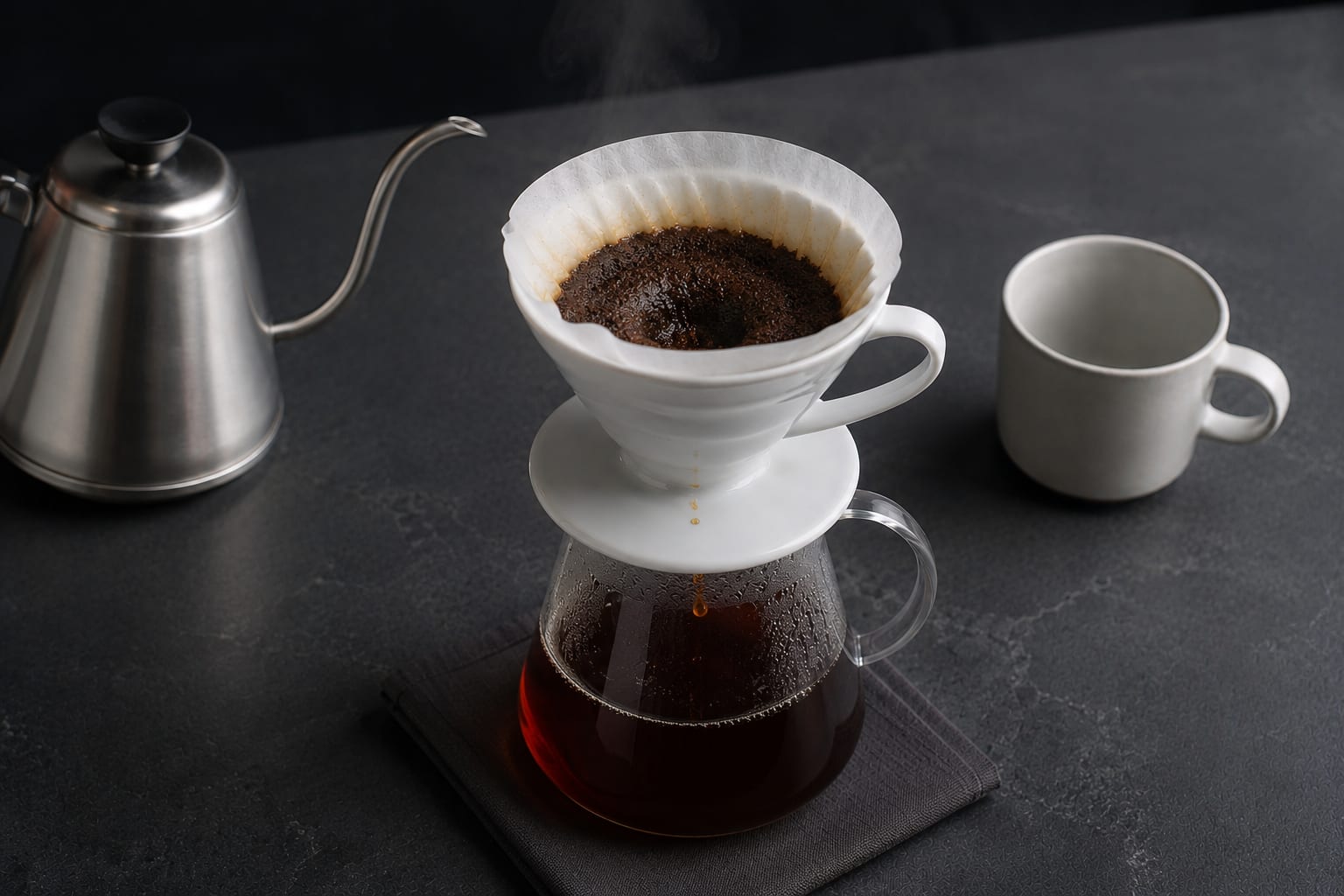
Allow the bed to drain fully, then serve.
Why this recipe works
The V60's cone shape and large single hole make it the most pour-dependent brewer there is. Everything you control (water speed, temperature, where you pour) lands directly in the cup. This recipe is tuned to push clarity rather than body.
Ratio. We pour 1:16 because it sits at the bright end of balanced. Lighter ratios thin out the florals this recipe is built around; heavier ones muddy the clarity that the V60's paper filter and cone shape produce. At 18g (0.63oz) of coffee, 1:16 puts 288ml (9.7 fl oz) of water through the bed without overloading it.
Temperature. 96°C (205°F) is hotter than the usual V60 advice, and that is deliberate. Paper-filtered pour over is a fast, efficient extraction, so high heat doesn't scorch the way it would in a pressurized brew. It pulls more of the aromatic, acidic, floral compounds forward, exactly the notes a clarity-first cup wants. Drop cooler and you trade brightness for a flatter, safer cup.
Grind. Medium-fine, finer than drip, coarser than espresso. Too coarse and the water races through before it extracts, leaving a thin, sour cup. Too fine and the bed clogs, the brew stalls past five minutes, and bitterness creeps in.
Pour pattern. Pour matters more on a V60 than on any other brewer because the cone gives water nowhere to pool. Bloom first with 40ml (1.4 fl oz) to let trapped gas escape, then pour in slow concentric circles from center outward. Pouring too fast or only down the center channels water past the grounds and extracts unevenly.
Most V60 guides play it safe at 92°C. We brew hotter because the floral, acidic, and aromatic compounds the V60 is designed to surface only extract well at higher temperatures. At 96°C, the spiral pour carries single-origin character into the cup instead of leaving it in the grounds.
What to adjust
If your cup tastes too bitter: your grind is likely too fine or the brew stalled past five minutes. Go one step coarser so the water flows freely, and keep your pour steady rather than dumping it all at once.
If your cup tastes too sour or thin: the water moved through too fast, usually a grind that's too coarse or a center-only pour that channeled past the grounds. Go one step finer, and pour in slow concentric circles from the center outward to wet the whole bed evenly.
If your cup tastes flat or papery: you skipped the filter rinse. Always rinse the paper filter with hot water before brewing. It removes the papery taste and preheats the cone so your brew temperature holds.
If your extraction is uneven cup to cup: your grind is inconsistent. A burr grinder produces uniform particles; a blade grinder chops unevenly, so some grounds over-extract while others under-extract in the same brew.
Brewed it? Tell us how it went.
Related
More recipes
- Japanese Iced Coffee Recipe: The iCoffee House Brew
Bright and aromatic, hot-brewed straight onto ice for instant chill. 30g coffee, 300ml water at 96°C, 1:16 ratio, medium-fine grind. Ready in 5 minutes.
- Chemex Recipe: The iCoffee House Brew
Bright and tea-like, with clarity from Chemex's thick paper filter. 30g coffee, 510ml water at 93°C, 1:17 ratio, medium-coarse grind. About 7 minutes.
- Auto Drip Recipe: The iCoffee House Brew
Mellow and even, with enough body to drink black. 60g coffee, 960ml water at 92°C, 1:16 ratio, medium grind. About ten minutes from grinder to full carafe.
Related guides
- Pour over vs French press vs AeroPress
AeroPress vs French press vs pour over: which makes better coffee? Clarity, body, speed, and forgiveness compared, with an honest pick for each brewer.
- Pour Over vs Drip Coffee: Is the Upgrade Worth It?
A pour over gives you the temperature, the pour and the grind to adjust. A drip machine gives you a button. Which one suits you, on flavor, effort and cost.
- Is Your Grinder the Problem? How to Tell Before You Upgrade
Before you spend money on a new grinder or espresso machine, here's how to use your own brew data to confirm which one is actually your bottleneck.